10 Best 5 Axis CNC Machines for Sale
Choosing a 5 axis cnc machine is not simply a matter of counting axes. It is a production decision involving accuracy, rigidity, software, service, and operator skill. Dr. Tony Schmitz, a respected machining researcher and professor, captures the practical issue clearly: “A five-axis machine creates value when it improves the process, not merely when it adds motion.” That principle guides this review of the 10 Best 5 Axis CNC Machines for Sale.
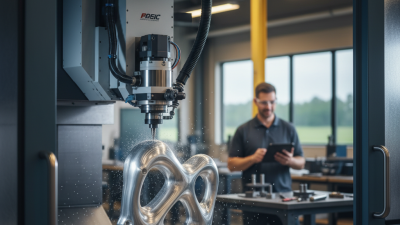
These machines can reach angled surfaces, shorten setups, and reduce the need for repeated fixturing. Imagine machining an aluminum impeller while the cutter stays correctly oriented around each curved blade. That saves time. It can also improve surface consistency. However, the results depend on more than the machine’s brochure. Controller performance, rotary-axis backlash, spindle torque, work envelope, and post-processor quality deserve careful inspection.
The comparison considers real workshop conditions, including aerospace parts, medical components, molds, prototypes, and small-batch production. It also examines installation support, training, maintenance access, and total ownership cost. A low purchase price may look attractive. It may not remain attractive after tooling, software, service calls, and downtime.
No machine fits every shop. That is the uncomfortable part. A compact model may suit a prototype room but struggle with large fixtures. A powerful machine may exceed a small manufacturer’s needs. The following guide therefore balances specifications with practical evidence, while recognizing that published performance claims still require verification through demonstrations, test cuts, and customer references.
What Is a 5-Axis CNC Machine and How Does It Work?
What Is a 5-Axis CNC Machine and How Does It Work?
A 5-axis CNC machine moves a cutting tool along three linear directions: X, Y, and Z. It also rotates the workpiece or spindle around two additional axes. These rotary movements are commonly called A, B, or C axes. Together, they let the tool reach angled surfaces without repeated manual repositioning.
In practical machining, the machine follows digital toolpaths created in CAD/CAM software. The software calculates tool angles, cutting paths, feed rates, and collision risks. A controller then converts this information into coordinated motion. Some machines cut all five axes simultaneously. Others use 3+2 positioning, locking the rotary axes before cutting. Both methods have practical value. Simultaneous motion suits complex contours, while 3+2 machining can simplify programming and improve stability.
A reliable setup still depends on more than the machine itself. Rigid workholding, accurate probing, proper tool length measurement, and verified post-processing are essential. A small fixture error can appear as a large surface mismatch. I have seen excellent programs produce poor results because tools were too long or chips were trapped beneath the stock. That part is easy to overlook.
When comparing 5-axis CNC machines for sale, inspect travel ranges, spindle power, rotary-table capacity, control features, and service support. Check the machine’s real working envelope, not only its advertised specifications. Test sample parts when possible. No machine removes the need for careful setup.
A 5-axis CNC machine combines three linear axes—X, Y, and Z—with two rotary axes selected from A, B, and C. The chart compares common CNC motion configurations and shows how 5-axis machining adds rotary movement for improved access to complex surfaces.
Key Features to Compare When Choosing a 5-Axis CNC Machine
When comparing 5-axis CNC machines for sale, start with the work envelope, not the brochure. Measure the largest part, fixture, tool, and rotary movement together. A crowded enclosure can turn a suitable machine into an expensive limitation. Check table diameter, maximum workpiece weight, axis travel, and rotary-axis clearance. These details matter during real production.
Look closely at simultaneous 5-axis capability. Some machines position rotary axes, while others cut continuously across all five axes. The control system should process complex toolpaths smoothly, without visible pauses or faceted surfaces. Ask about positioning accuracy, repeatability, thermal compensation, and calibration procedures. Small errors become obvious on turbine blades, molds, and angled holes. Spindle speed alone is not enough. Compare spindle torque, power, taper type, tool capacity, and cutting stability across your materials.
I have learned to inspect probing, simulation, chip evacuation, coolant delivery, and service access before judging price. These features reduce setup errors and downtime. CAM compatibility and a reliable postprocessor are equally important. A powerful machine with poor programming support may sit idle. That happens.
Consider operator training, preventive maintenance, warranty coverage, and local technical assistance. Review test-cut results using your own material and tooling. Also calculate installation, tooling, software, and energy costs. My earlier comparisons focused too heavily on rapid traverse rates. In practice, repeatable production and easy setup often matter more. A lower purchase price can hide higher ownership costs.
10 Best 5-Axis CNC Machines for Sale
10 Best 5-Axis CNC Machines for Sale
The best 5-axis CNC machines for sale should match your material, tolerance, and floor space. My practical shortlist includes compact trunnion mills, swivel-head machining centers, horizontal 5-axis mills, gantry systems, and mill-turn platforms. Other strong choices include high-speed mold machines, heavy-duty aerospace centers, automated pallet models, robotic loading cells, and entry-level production machines. Each option serves a different workshop reality.
Fortune Business Insights reports that the global CNC machine market reached approximately USD 83.99 billion in 2023. Its forecast also indicates continued growth through 2032. Grand View Research identifies automation, tighter tolerances, and complex part production as major market drivers. These trends support 5-axis investment, but a larger machine is not automatically better. Check spindle torque, rotary-axis accuracy, tool capacity, probe compatibility, and post-processor support. A beautiful specification sheet can still disappoint.
Tips: Request a cutting test using your actual alloy and tool sizes. Measure cycle time, surface finish, and setup changes. Ask for service response times and training terms. Leave room for honest doubt; many buyers underestimate programming complexity. Verify electrical requirements, coolant handling, and chip evacuation before ordering. A used 5-axis machine may offer value, but inspect backlash, thermal drift, and maintenance records carefully. Calibration data matters more than polished sales language.
Best 5-Axis CNC Machines for Different Manufacturing Needs
10 Best 5 Axis CNC Machines for Sale
The best 5-axis CNC machine depends on your manufacturing needs. Aerospace shops often need high-speed machining and tight thermal control. Medical manufacturers usually prioritize surface quality, traceability, and stable repeatability. Job shops may value quick setup and flexible workholding more.
The 2024 IFR World Robotics report recorded 541,302 industrial robot installations worldwide in 2023. This growth reflects a wider move toward connected production. However, automation alone cannot fix poor process planning. A 5-axis machine needs accurate probing, reliable software, and trained operators. The wrong configuration can create expensive idle time. That detail is easy to overlook.
Tips: Compare spindle torque, rotary-table size, tool capacity, and service response. Request a sample cut using your real material. Check positional accuracy under continuous rotary movement, not only in a static test.
For aluminum parts, prioritize high spindle speed and rapid acceleration. Titanium work benefits from strong torque and rigid construction. Complex impellers need smooth simultaneous motion and effective collision control. Large molds require generous travel and dependable thermal compensation. According to Deloitte’s 2024 Smart Manufacturing and Operations Survey, 86% of manufacturers expect smart manufacturing to become a major competitiveness driver within five years. Therefore, machine connectivity matters, but compatibility deserves careful review. A practical evaluation should include post-processor support, inspection integration, operator training, and maintenance access. Some buyers focus too heavily on specifications. Real productivity may depend more on setup time, chip evacuation, and software stability. Metrics should be tested before purchase.