Blog

What Are the Best Machined Parts Manufacturers in China?

China has become a major sourcing base for precision machined parts, serving automotive, aerospace, medical, robotics, and industrial equipment companies. Its advantage is not simply lower pricing. It includes dense supplier networks, advanced CNC capacity, skilled technicians, and integrated metal-finishing services.

The United Nations Industrial Development Organization reported that China remained the world’s largest manufacturing contributor, producing more than 30% of global manufacturing value added in recent years. Grand View Research also projects strong growth in the global CNC machine market through 2030. These figures suggest expanding capability, but they do not prove that every factory delivers consistent quality. That distinction matters.

A useful quality principle comes from W. Edwards Deming: “Quality comes not from inspection, but from the improvement of the production process.” This idea fits machined parts purchasing closely. A reliable manufacturer should demonstrate process control, material traceability, calibrated equipment, documented inspections, and realistic tolerances. A polished website is not enough.

This guide will compare leading Chinese manufacturers through practical criteria, including machining accuracy, production scale, certification, communication, lead times, and after-sales support. It will also consider five-axis machining, surface treatment, prototype flexibility, and export experience. Some rankings may remain subjective. Supplier performance can change after one new machine, one lost engineer, or one rushed order. That uncertainty deserves attention.

The best choice is rarely the cheapest quotation. It is the supplier that can repeatedly produce the same metal component, with the same dimensions, under controlled conditions. That is where capability becomes trust.
What Are the Best Machined Parts Manufacturers in China?

What Defines a Leading Machined Parts Manufacturer in China?

What defines a leading machined parts manufacturer in China? Production scale alone is not enough. A reliable supplier combines engineering judgment, stable processes, and clear evidence. The ISO Survey 2023 recorded more than 1.2 million ISO 9001 certificates worldwide. Yet certification is only a starting point. I would not treat a certificate as proof of machining excellence.

Strong manufacturers show capability through measurable results. They inspect first articles with calibrated CMM equipment, record tool wear, and control temperature near the machining area. Process capability data, such as Cpk values, should support critical dimensions. Material certificates must follow each batch. Traceability matters.

Digital control is increasingly important. Deloitte’s 2024 Global Smart Manufacturing Survey reported that 92% of manufacturers view smart manufacturing as a major competitiveness driver. Leading workshops therefore connect production records with inspection data, rather than relying on scattered spreadsheets. They also provide clear revision control and realistic delivery updates. No vague promises.

The World Bank’s 2023 Logistics Performance Index ranked China 19th globally, showing strong logistics capability but not eliminating supply-chain risk. A capable manufacturer plans packaging, export documents, and contingency capacity before production begins. Communication still reveals the difference. Engineers should explain tolerance risks in plain language and question an unclear drawing. That can feel inconvenient. It often prevents an expensive mistake.

What Defines a Leading Machined Parts Manufacturer in China?

Typical dimensional tolerance benchmarks by machining process. Lower values indicate tighter dimensional control, although actual results depend on material, geometry, machine condition, inspection method, and production volume.

When comparing machined parts manufacturers, review process capability together with inspection systems, material traceability, quality certifications, engineering support, and consistent delivery performance.

Which Types of Machined Parts Do Chinese Manufacturers Produce?

Chinese manufacturers produce far more than simple bolts and brackets. According to the United Nations Industrial Development Organization’s 2024 statistics, China generated about 31.8% of global manufacturing value added in 2022. This industrial depth supports large, specialized machining networks.

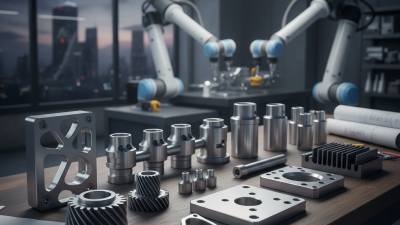
Typical outputs include CNC-turned shafts, threaded inserts, valve bodies, and miniature fasteners. CNC milling suppliers make aluminum housings, stainless-steel brackets, heat sinks, and complex medical components. Five-axis workshops produce impellers, turbine parts, molds, and curved aerospace structures. Swiss-type machines handle slender pins and electronic connectors. Grinding improves bearing seats, while wire EDM creates narrow slots and sharp profiles. Materials often include aluminum 6061, stainless steel 316L, titanium alloys, brass, PEEK, and engineering plastics.

A 2024 market assessment forecasts the global CNC machining market to expand at roughly 10% annually through 2030. Chinese factories are responding with automated inspection, robotic loading, and multi-axis equipment. Still, equipment lists can mislead. A supplier may claim ±0.01 mm tolerance, yet provide weak measurement evidence. Ask for CMM reports, material certificates, surface-finish records, and sample parts. In my experience, the difficult detail is often not cutting the shape. It is controlling burrs, thread fit, heat distortion, and batch consistency. Some suppliers remain excellent at prototypes but struggle with repeat production. That distinction deserves careful review.

What Are the Best Machined Parts Manufacturers in China? - Which Types of Machined Parts Do Chinese Manufacturers Produce?
Machined Part Type Primary Manufacturing Process Common Materials Typical Size Range Typical Dimensional Tolerance Common Surface Finishes Typical Applications
CNC Turned Parts CNC turning, facing, threading, grooving and drilling Aluminum, stainless steel, carbon steel, brass, copper, titanium and engineering plastics Approximately 2–500 mm in diameter; length depends on machine capacity About ±0.005–0.03 mm for standard production, depending on material and geometry As-machined, polishing, anodizing, plating, passivation and black oxide Shafts, bushings, pins, fittings, fasteners and connector components
CNC Milled Parts 3-axis or 4-axis milling, drilling, tapping, pocketing and contouring Aluminum alloys, stainless steel, tool steel, brass, copper, titanium and POM Small precision components up to several hundred millimeters per side About ±0.01–0.05 mm for common features; tighter tolerances require additional control As-machined, bead blasting, anodizing, powder coating, plating and painting Housings, brackets, manifolds, tooling plates, machine bases and automation components
5-Axis Machined Parts Simultaneous or indexed 5-axis milling Aluminum, stainless steel, alloy steel, titanium, nickel alloys and plastics Complex components generally ranging from 20–600 mm Commonly about ±0.02–0.05 mm; geometric accuracy depends on setup and inspection Fine milling, polishing, anodizing, passivation and specialty coatings Impellers, aerospace brackets, medical components, molds and complex prototypes
Swiss-Type Turned Parts Swiss screw machining with guide-bushing support Stainless steel, brass, aluminum, titanium and medical-grade plastics Typically 0.5–32 mm in diameter, with small-diameter long parts possible Approximately ±0.005–0.02 mm for selected features Polishing, passivation, electropolishing, plating and ultrasonic cleaning Medical fasteners, miniature shafts, pins, valves and electronic contacts
CNC Ground Parts Surface grinding, cylindrical grinding or centerless grinding Hardened steel, stainless steel, tool steel, ceramics and carbide Small precision parts to medium-sized shafts and plates Approximately ±0.002–0.01 mm when process conditions are properly controlled Precision-ground, lapped and polished surfaces Bearings, precision shafts, dies, gauges, mold components and sealing surfaces
EDM Components Wire EDM or sinker EDM for electrically conductive materials Tool steel, hardened steel, carbide, copper and conductive alloys Small intricate profiles and components with deep or narrow features Approximately ±0.005–0.02 mm, depending on cut strategy and inspection method EDM finish, polishing, lapping and anti-corrosion treatment Precision molds, stamping dies, inserts, punches and intricate tooling parts
Machined Aluminum Parts CNC milling, CNC turning, drilling and tapping Common grades include 6061, 6063, 6082 and 7075 aluminum alloys Prototype parts to production components several hundred millimeters in size Commonly ±0.01–0.05 mm for standard features Anodizing, hard anodizing, bead blasting, polishing and powder coating Electronics housings, robotics, transportation, fixtures and consumer products
Machined Stainless Steel Parts CNC turning, milling, drilling, threading and grinding 304, 316, 17-4 PH and other stainless steel grades Small precision parts to medium-sized structural components Typically ±0.01–0.05 mm; tighter values depend on heat treatment and process control Passivation, electropolishing, polishing, bead blasting and PVD coating Food-processing equipment, medical devices, pumps, valves and industrial machinery
Plastic Machined Parts CNC milling, turning, routing and drilling POM, PA, PTFE, PEEK, PC, ABS, PVC and UHMW-PE Small components to medium-sized plates, guides and covers Usually about ±0.03–0.10 mm because of thermal expansion and material behavior As-machined, polishing, deburring and chemical-resistant finishing where applicable Insulators, wear pads, gears, seals, laboratory components and protective covers
Prototype and Low-Volume Parts CNC machining, rapid tooling and secondary finishing Metals and engineering plastics selected according to functional requirements One-off parts to several hundred pieces, subject to design complexity Production tolerance is normally defined by the technical drawing; non-critical features may use general tolerances Machined finish, anodizing, plating, painting, laser marking and assembly Product development, engineering validation, testing fixtures and pilot production

Note: The ranges shown are typical industry references rather than guarantees. Actual capability depends on the machine, material, part geometry, quantity, inspection method, heat treatment and drawing requirements.

How to Evaluate Machined Parts Manufacturers in China

Choosing the best machined parts manufacturer in China requires more than comparing prices. Start by checking practical experience with your material, tolerance range, and production volume. A supplier producing aluminum brackets may not handle hardened steel shafts equally well. Ask for recent sample parts, inspection reports, and clear process notes. Real evidence matters more than polished brochures.

Review the factory’s equipment and quality controls carefully. CNC mills, turning centers, surface grinders, and coordinate measuring machines should match your drawings. Check calibration records and ask how operators control tool wear.

Reliable manufacturers use incoming material checks, in-process inspection, and final dimensional reports. Traceability is essential. Each batch should connect to material certificates, inspection data, and production records.

Visit the facility remotely or in person when possible. Look for organized workstations, labeled materials, and operators who understand your critical dimensions. Communication also reveals professionalism. Can the engineering team explain tolerance risks without vague promises? Ask about corrective actions, lead times, packaging, and capacity during peak demand.

My first supplier audit focused too heavily on machine numbers and missed document discipline. That was a costly lesson.

A strong factory can still have weak follow-up systems. Request a small trial order before committing to regular production, then compare the parts, reports, response speed, and packaging condition. Reliable performance is built through repeated evidence, not one impressive sample.

What Certifications and Quality Standards Should You Check?

When evaluating machined parts manufacturers in China, inspect certifications before comparing prices. ISO 9001 shows that the supplier controls documented quality processes. It does not guarantee perfect parts. Check the certificate’s scope, factory address, issuing body, and expiry date. A certificate covering trading services is not enough.

Match industry standards to your application. Automotive components may require IATF 16949 and documented PPAP procedures. Aerospace work often demands AS9100, material traceability, and strict nonconformance control. Medical parts may need ISO 13485, clean handling, and validated processes. Ask for current material certificates, RoHS or REACH evidence, and calibration records for measuring equipment. Look closely.

Quality evidence should connect directly to your drawings. Request dimensional inspection reports, surface-finish results, hardness data, and CMM records when tolerances are tight. Confirm that reports identify the lot, material heat, inspection date, and actual readings. A factory should explain its sampling plan, corrective-action process, and final inspection method in clear language. Vague answers deserve caution.

I once treated a certificate as proof of manufacturing ability. That assumption was weak. A capable supplier should welcome a process audit, provide sample parts, and explain how operators control burrs, tool wear, and batch variation. Ask to see calibration labels on the shop floor. Also review rejected-part records, if available. No system is flawless. Honest manufacturers can describe a recent failure and the change made afterward.

How to Select the Best Chinese Manufacturer for Your Project

Selecting the best Chinese machined parts manufacturer requires more than comparing prices. Review its experience with your material, tolerance, surface finish, and production volume. A capable supplier should explain its process clearly, from drawing review to final inspection. Ask for sample parts, inspection reports, and evidence of calibrated measuring equipment. A factory floor with organized machines, clean storage, and traceable records often reveals more than a polished website.

Tips: Send a complete technical package. Include 3D files, 2D drawings, material grades, tolerances, packaging needs, and delivery targets. Request a small trial order before full production. Measure the samples independently when possible. Check how the manufacturer handles nonconforming parts, engineering changes, and delayed materials. Clear communication matters. So does documented accountability.

Cost should not be the only deciding factor. Compare tooling fees, inspection charges, shipping terms, and possible rework costs. Experienced manufacturers may suggest a better tolerance or machining sequence, but every suggestion needs technical proof. Ask about equipment capacity, operator training, quality standards, and subcontracted processes. Video audits can help, although they cannot replace an on-site visit. My own evaluation mistake was trusting fast replies as proof of reliability. They are not. A slower supplier with precise questions may understand the project better. Review several quotations using the same checklist, and keep expectations realistic about development time, quality risks, and production consistency.

Go to Top