
Blog

China Best Automatic Zipper Machine Manufacturer?

Choosing the best China automatic zipper machine manufacturer requires more than comparing prices. It demands practical knowledge, verified performance, and clear communication. A reliable supplier should explain machine speed, zipper size range, feeding accuracy, heating control, and power requirements. These details affect production every day. Details matter.

Experienced buyers often request sample testing before placing a large order. The machine should run different zipper materials, including nylon, resin, and metal styles. Operators should inspect alignment, cutting consistency, noise levels, and maintenance access. A factory video can help, but it cannot replace an on-site audit or independent inspection. Proof matters.

This guide will examine how manufacturers demonstrate expertise, quality control, and after-sales support. It will consider factory experience, engineering capabilities, spare-parts availability, training, warranty terms, and export documentation. Certifications should be checked against the actual machine model, not accepted as decoration. A trustworthy manufacturer also provides readable manuals and realistic production data.

No supplier is perfect. Even a capable factory may have delays, communication gaps, or limited customization experience. That deserves honest consideration. Buyers should compare several manufacturers and record test results in writing. A strong partner answers technical questions clearly and accepts reasonable quality checks. It should also understand workplace safety and applicable trade requirements.

The “best” manufacturer depends on your zipper type, output target, budget, and service expectations. This article offers a practical framework for making that decision with fewer assumptions. It focuses on evidence, not impressive promises. Candor helps.
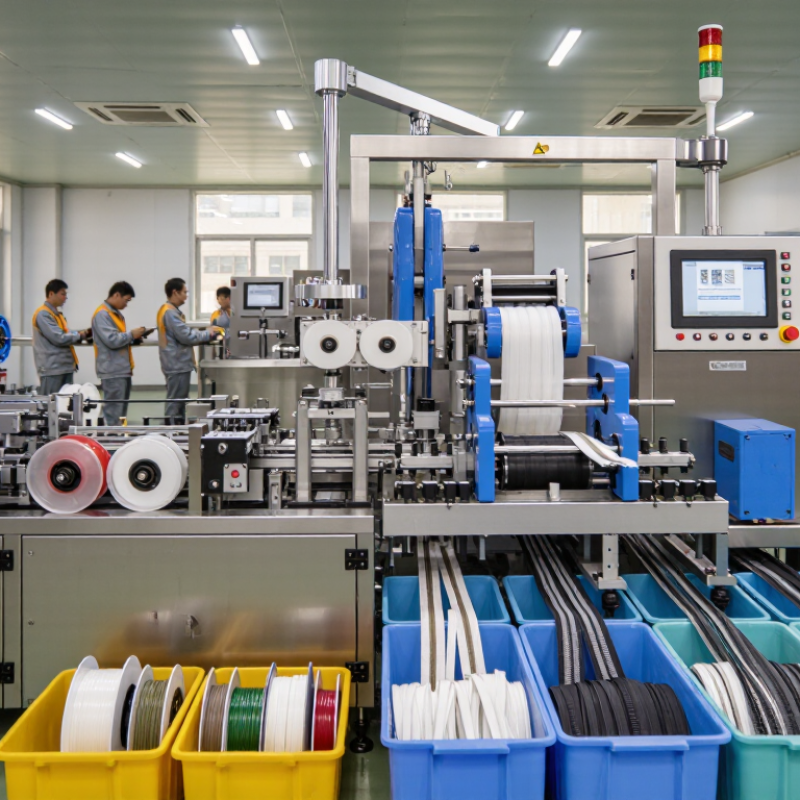
China Best Automatic Zipper Machine Manufacturer?

What Defines China’s Best Automatic Zipper Machine Manufacturer?

China’s best automatic zipper machine manufacturer is defined by proven engineering, not polished advertising. An experienced manufacturer understands tape tension, tooth alignment, cutting accuracy, and heat control. These details decide whether a machine runs smoothly during long production shifts.

Reliable manufacturers test machines with real materials before shipment. They measure speed, noise, temperature, and rejection rates. A useful factory should provide sample trials, clear maintenance schedules, and traceable inspection records. Operators should also receive practical training, not only a thick manual. During testing, engineers may adjust feeding rollers by fractions of a millimeter. Small changes can prevent repeated zipper jams.

A strong technical team responds with evidence. It explains motor selection, sensor placement, software settings, and spare-part availability in plain language. Independent quality checks and consistent documentation improve trust. However, no manufacturer fits every production line. A machine that performs well with nylon tape may need adjustments for metal or resin zippers. One trial run may also reveal unexpected vibration. That is not failure alone; it shows where the design needs refinement. Buyers should compare trial results, service response times, warranty terms, and total operating costs. The best choice is usually the manufacturer that stays transparent when performance is imperfect.

How 80–120 Zippers per Minute Measures Production Efficiency

China Best automatic zipper machine Manufacturer?

How 80–120 Zippers per Minute Measures Production Efficiency

An automatic zipper machine rated at 80–120 zippers per minute can look impressive on paper. In factory trials, the real figure often changes with zipper size, tape material, slider design, and operator adjustments. A machine may reach 120 pieces during a short test, then operate closer to 90 during a full shift.

Speed is only one part of production efficiency. A useful calculation includes running time, accepted output, changeover delays, and rejected pieces. For example, producing 100 zippers per minute means little if frequent jams stop the line. A stable 85 pieces with fewer defects may create more saleable products. That difference matters.

Watch the details.

During evaluation, record output at regular intervals. Check zipper alignment, tooth engagement, cutting accuracy, and surface marks. Measure downtime separately for material loading, cleaning, calibration, and fault recovery. One overlooked sensor can reduce hourly output more than expected.

I have seen operators slow a machine slightly to protect delicate tape. That choice can improve consistency, but it also reveals a weakness in simple speed comparisons. Manufacturer support, spare-part access, safety features, and training influence long-term reliability. A practical supplier should provide test data using the buyer’s actual materials, not only ideal samples. The best machine may not be the fastest model; it may be the one that maintains predictable quality at 80–120 zippers per minute.

China Best Automatic Zipper Machine Manufacturer? How 80–120 Zippers per Minute Measures Production Efficiency

This benchmark compares nominal zipper output with estimated effective production at 85% operating utilization. At 80, 100, and 120 zippers per minute, the corresponding theoretical hourly outputs are 4,800, 6,000, and 7,200 zippers. The effective figures account for routine loading, adjustment, inspection, and brief downtime.

Which Suppliers Meet ISO 9001, CE, and 95%+ Uptime Standards?

China Best Automatic Zipper Machine Manufacturer?

For automatic zipper production, certificates matter only when they match factory evidence. ISO’s 2022 Survey recorded more than one million ISO 9001 certificates worldwide. This standard shows controlled processes, traceability, and corrective actions. It does not prove perfect machine performance. CE marking confirms applicable European conformity requirements, but it is not an independent quality award. Ask for the Declaration of Conformity, risk assessment, and electrical test records.

A credible supplier should define 95% uptime clearly. Is uptime measured during scheduled production or the entire calendar month? During a 192-hour monthly schedule, 95% uptime allows about 9.6 hours of stoppage. Request twelve months of machine logs, spare-parts response times, and a witnessed acceptance test using your zipper material. McKinsey reports that predictive maintenance can reduce downtime by 30–50% and maintenance costs by 10–40%. Still, those figures are broad industry estimates, not automatic zipper guarantees. I would question any supplier showing only a polished factory video.

Tips:

Check ISO 9001 scope and expiry dates. Verify CE documents against the exact model. Test feeding, teeth alignment, cutting, and sealing under continuous load. Record output, rejects, and recovery time. A short trial can mislead. A longer trial reveals heat, dust, and operator errors.

How ±0.1 mm Accuracy Affects Zipper Quality and Waste Reduction

China Best Automatic Zipper Machine Manufacturer?

How ±0.1 mm Accuracy Affects Zipper Quality and Waste Reduction

In zipper production, ±0.1 mm accuracy can change how smoothly teeth engage. A small spacing error may cause weak closure, slider resistance, or visible waviness. These defects often appear after several meters of continuous production. That makes them expensive to find late.

Accurate automatic machines help control tooth placement, tape feeding, and cutting length. In a practical factory setting, operators can inspect samples with digital calipers and a tooth-spacing gauge. When measurements stay near the target, fewer rolls require rework. Material waste also falls because fewer defective sections need cutting away. The saving is not only fabric and metal. It includes labor, machine time, and delayed delivery.

Consistency matters most.

However, ±0.1 mm is not a magic solution. Tension changes, worn tools, dust, and temperature can still affect results. A machine may meet its specification during a morning test and drift later. Regular calibration and simple cleaning checks remain necessary. This is where production teams sometimes fall short. They may trust the display without checking the finished zipper by hand. A reliable process combines measured accuracy with pull tests, visual inspection, and recorded adjustments. The target should be reviewed against zipper size, tape type, and operating speed, rather than treated as a universal guarantee.

How to Compare 2–4 Operator Savings, Warranty, and Total Cost of Ownership

China Best Automatic Zipper Machine Manufacturer?

Comparing automatic zipper machines starts with labor, not the purchase price. A useful factory audit records operators per shift, hourly compensation, output, downtime, and changeover minutes. If one machine replaces two operators, savings depend on real utilization. The U.S. Bureau of Labor Statistics’ Employer Costs for Employee Compensation shows that benefits add substantially to wage costs. Include both figures. Otherwise, the calculation is incomplete.

A machine removing two to four operator positions may reduce feeding, inspection, and packing labor. However, one technician may still be needed for setup and maintenance. Labor savings become credible only after measuring reject rates and cycle stability. The IFR World Robotics 2024 report recorded 541,302 industrial robot installations worldwide in 2023. Automation is expanding, but zipper production has different handling challenges. Ask for verified samples using your zipper sizes, fabric types, and speeds.

Warranty terms deserve equal attention. Check coverage for motors, sensors, controllers, tooling, and travel labor. A twelve-month warranty sounds strong until consumable parts are excluded. Request response times and spare-parts availability in writing. Calculate total cost of ownership over five years: purchase, freight, installation, training, electricity, maintenance, downtime, and software fees. Deloitte’s 2024 Smart Manufacturing and Operations Survey found 86% of surveyed leaders viewed smart manufacturing as important for competitiveness. Still, a spreadsheet can lie. Your production data matters more. One overlooked changeover may erase the expected saving.

China Best Automatic Zipper Machine Manufacturer? - How to Compare 2–4 Operator Savings, Warranty, and Total Cost of Ownership

Evaluation Dimension Semi-Automatic Benchmark Automatic Configuration A Automatic Configuration B Automatic Configuration C
Typical Production Setup Manual feeding with semi-automatic closing and inspection Automatic feeding, closing, cutting, and basic counting High-throughput automatic line with integrated inspection and packing interface
Recommended Staffing 2–4 operators per production line 1 operator per line 1 operator for one line; additional support may be needed for packing
Operator Reduction vs. 4-Person Baseline 0 operators 3 operators 3 operators
Typical Output per 8-Hour Shift 2,000–3,000 pieces 4,000–5,000 pieces 6,000–8,000 pieces
Indicative Machine Price US$18,000–35,000 US$45,000–60,000 US$85,000–120,000
Installation and Training Allowance US$1,500–3,500 US$4,000–6,000 US$7,000–12,000
Electrical Load Approximately 2–4 kW Approximately 5–7 kW Approximately 8–12 kW
Estimated Energy Cost per Year US$500–1,000 US$1,200–1,700 US$2,000–3,000
Typical Warranty Coverage 12 months for major components 12 months for machine and control system 12–24 months, depending on contract scope
Preventive Maintenance Allowance Approximately 4–6% of machine price per year Approximately 3–5% of machine price per year Approximately 4–6% of machine price per year
Expected Technical Support Response Remote support; on-site support usually scheduled Remote diagnosis with spare-parts support Dedicated commissioning and advanced service support recommended
Estimated Annual Labor Cost* US$48,000 for 4 operators US$12,000 for 1 operator US$12,000 for 1 operator
Estimated Annual Labor Saving* US$0 US$36,000 US$36,000
Estimated Five-Year TCO Including Labor** Approximately US$277,000 Approximately US$132,000 Approximately US$197,000
Estimated Payback Period vs. Semi-Automatic Benchmark Not applicable Approximately 1.0 year Approximately 1.8 years
Best Fit for Small-volume production and highly varied orders Cost-focused production with stable product specifications Large-volume production with continuous demand and higher throughput requirements
Key Verification Items Before Purchase Operator skill, changeover time, and quality consistency Actual output test, feeding reliability, and spare-parts availability Line integration, service coverage, uptime guarantee, and production data connectivity
Planning assumptions: TCO figures are benchmark estimates rather than quotations. The calculation assumes 250 operating days per year, an 8-hour shift, a fully loaded labor cost of US$6 per hour, electricity at US$0.12 per kWh, five-year ownership, standard preventive maintenance, and no financing, taxes, freight, downtime losses, or resale value. Actual results should be validated through a production trial, written warranty terms, and a detailed supplier quotation.
Go to Top