
How to Choose Energy Efficient Aluminum Windows in 2026
In 2026, choosing Energy efficient aluminum windows means looking beyond a slim frame or a polished product label. Aluminum is strong and durable, but it conducts heat readily. A well-designed thermal break separates interior and exterior metal, helping reduce heat transfer. Glass matters just as much: low-emissivity coatings, insulated panes, and suitable gas fills can improve comfort and performance.
Window researcher Dr. Dariush Arasteh’s work at Lawrence Berkeley National Laboratory highlights an important principle: evaluate the complete window system, not the frame material alone. Compare whole-window U-factor and solar heat gain coefficient, and check the test ratings behind each claim. A lower U-factor generally limits heat flow; the right solar gain depends on climate, orientation, and shading. Small details count.
Think of a south-facing room with afternoon sun, or a north-facing bedroom that feels chilly near the glass. The same specification may not suit both. Ask for performance data, installation guidance, and warranty terms, then compare products on equal terms. Also consider air leakage, condensation resistance, and how the frames will be maintained. A premium rating cannot fix a poor installation. That part is easy to overlook.
There is no single best window for every home. This guide explains how to balance efficiency, daylight, comfort, durability, and cost when choosing aluminum windows in 2026. Expect trade-offs. Even careful comparisons leave some uncertainty, especially when real weather and workmanship vary.
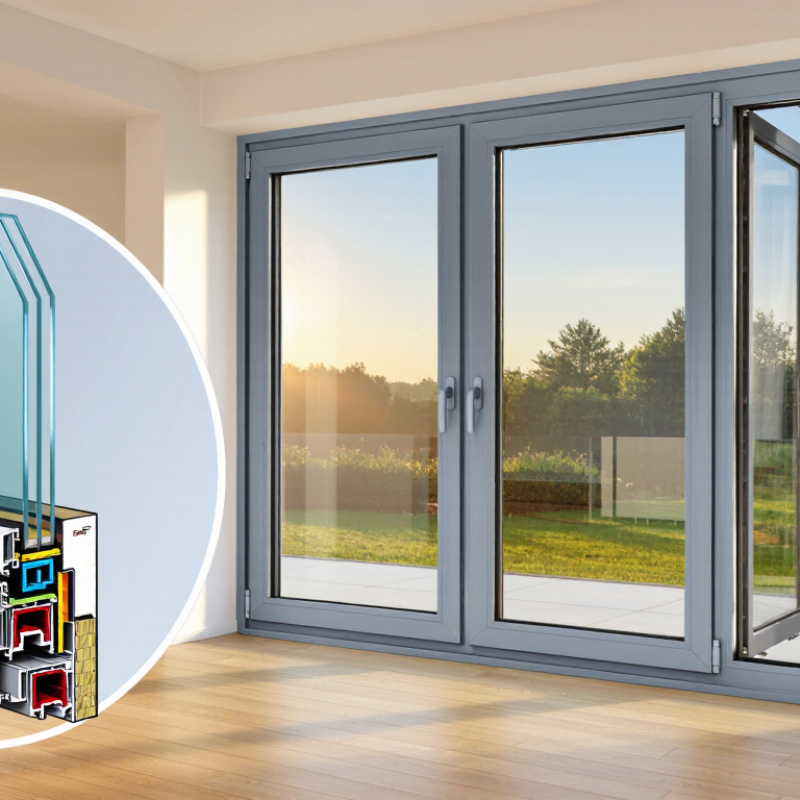
Understand the Energy Performance of Aluminum Windows
Aluminum frames are strong and slim, but metal conducts heat readily. Look for a continuous thermal break that separates the indoor and outdoor frame surfaces. Without it, a cold frame can feel chilly beside your hand on a winter morning. The U.S. Department of Energy estimates that windows account for 25–30% of residential heating and cooling energy use. That figure covers heat gain and loss, not aluminum windows alone.
Compare the whole-window U-factor and solar heat gain coefficient (SHGC), rather than judging glass or frame in isolation. The National Fenestration Rating Council (NFRC) label provides these standardized ratings. Lower U-factors generally reduce heat transfer; the right SHGC depends on climate, orientation, and shading. A low U-factor alone is not the whole story. Poor installation can leave air leaks around the frame, weakening expected performance. It is easy to focus on the product and overlook the opening itself.
Tips: Check the NFRC label, then match ratings to your local climate. Ask how the thermal break is constructed and how installers seal the perimeter. Inspect the sill and corners for gaps after installation. These details are less exciting than frame color, but they matter. I would still treat published ratings as a starting point, not a promise of identical results in every home.
| Performance Dimension | What the Rating or Feature Means | How to Compare Products | Practical Selection Guidance |
|---|---|---|---|
| U-Factor | Measures heat transfer through the complete window. In U.S. ratings it is commonly reported in Btu/(h·ft²·°F); lower values mean less heat loss or gain through the window. | Compare certified whole-window ratings in the same units, not glass-only figures. For conversion, 1 Btu/(h·ft²·°F) equals approximately 5.678 W/(m²·K). | Prioritize a lower U-factor in cold climates and wherever reducing indoor heat loss is important. Compare the exact size and configuration you plan to buy. |
| Solar Heat Gain Coefficient (SHGC) | A dimensionless value from 0 to 1 describing the fraction of solar heat admitted through a window. A lower value admits less solar heat. | Compare the SHGC shown on the product’s certified rating label. The appropriate value depends on climate, orientation, shading, and cooling needs. | Lower SHGC can help limit unwanted summer heat, especially on sunny exposures. In cold, sunny locations, a higher SHGC may provide useful passive solar heat when the building design can use it. |
| Visible Transmittance (VT) | A dimensionless value from 0 to 1 indicating how much visible daylight passes through the window. | Compare VT alongside SHGC and U-factor; glazing choices that change solar control can also affect daylight and appearance. | Choose a higher VT when daylight is a priority, while checking glare, privacy, and the window’s solar-heat performance. |
| Air Leakage | Measures air passing through the closed window assembly under a specified test pressure. U.S. ratings commonly express it in cubic feet per minute per square foot (cfm/ft²). | When an air-leakage rating is available, compare products tested using the same method and units. Lower leakage indicates a tighter tested assembly. | Look for well-designed weatherstripping, secure locking points, and careful installation. A high-performing window can still leak if the frame-to-wall joint is poorly sealed. |
| Thermal Break in the Aluminum Frame | A less-conductive section separates the interior and exterior aluminum parts, reducing heat flow through the frame. It does not eliminate heat transfer. | Confirm that the specified product has a thermally broken frame. Compare whole-window ratings because frame design contributes to overall performance. | For energy efficiency, avoid assuming that all-aluminum frames perform alike. Frame geometry, thermal-break design, glazing, spacers, and seals all affect the result. |
| Glazing and Low-E Coatings | Multiple panes create insulating air or gas spaces. Low-emissivity (low-E) coatings reduce heat transfer by reflecting selected wavelengths; coating type affects solar gain and visible light. | Use the whole-window U-factor, SHGC, and VT to compare glazing packages rather than relying on pane count or coating descriptions alone. | Double- or triple-pane glazing, low-E coatings, and sealed gas-filled spaces can improve performance, but the best combination depends on climate and the target ratings. |
| Gas Fill and Spacer | Argon or krypton gas between panes can reduce heat transfer compared with ordinary air when the insulated glass unit is properly sealed. Spacers join the panes at the edge. | Check the stated whole-window ratings and product documentation. Gas type by itself does not establish the performance of the complete window. | Consider the glazing package as a system, including the spacer and seal durability. Ask for certified ratings for the exact product configuration. |
| Condensation Resistance | Where a recognized rating is provided, a higher condensation-resistance rating indicates better resistance to condensation under the specified test conditions. | Compare ratings using the same scale and testing program. Indoor humidity, ventilation, and outdoor temperature also affect real-world condensation. | Useful in cold or humid conditions. A thermally broken frame and suitable glazing may help, but no window rating can guarantee that condensation will never occur. |
| Installation and Whole-Window Fit | Performance depends on the complete window and how it is installed, including perimeter air sealing, flashing, drainage, and the connection to the wall. | Match the product’s certified size and configuration to the project, and review the installation instructions before purchase. | Specify professional installation details that control air and water leakage. Verify that the opening is measured correctly and that the finished assembly is sealed and drained as designed. |
Ratings describe performance under standardized test conditions, not guaranteed energy savings. Compare certified whole-window data for the same product type and configuration, then choose values appropriate to the local climate, building orientation, and project requirements.
