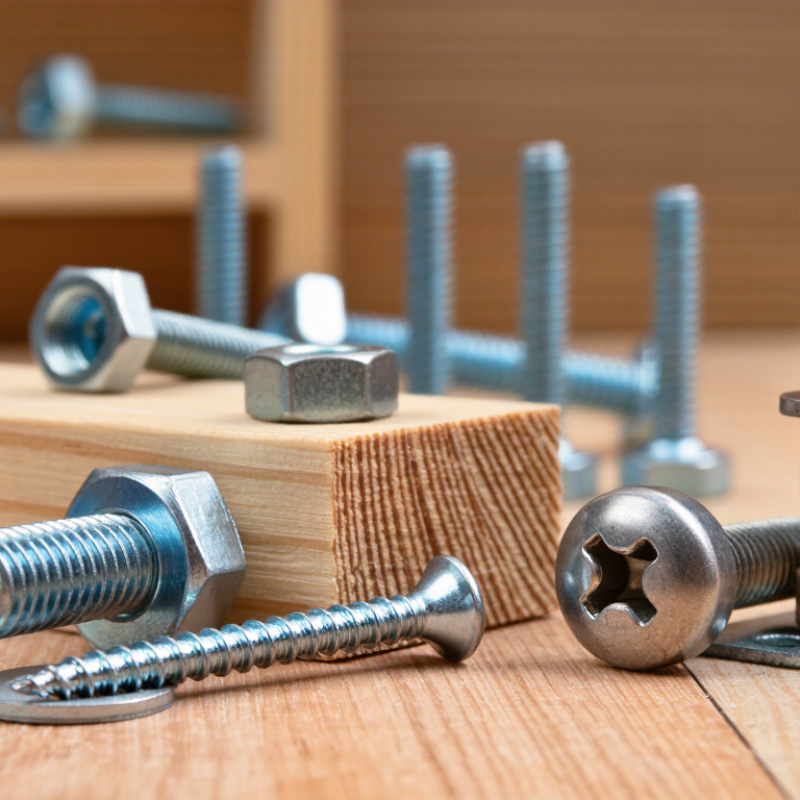
| Two metal parts joined with access to both sides | Tension from clamping; possible shear between parts | Machine bolt or hex-head bolt with a nut; use a washer when needed to distribute bearing pressure or protect the surface. | Choose a material and property class compatible with the required strength, mating parts, and environment. Match the nut to the fastener system. | Calculate tensile and shear loads, confirm edge distance and hole size, and establish the required tightening method and preload. |
| Component threaded into a tapped metal hole | Thread stripping, tensile load, or loosening under vibration | Machine screw or cap screw threaded directly into the component. | Use a thread form and pitch compatible with the tapped hole. Ensure adequate thread engagement for the material and load; softer materials may require more engagement or a threaded insert. | Check the strength of both the screw and the internal threads, along with hole depth and the risk of bottoming out. |
| Thin sheet metal or light-gauge panels | Pull-out, sheet deformation, or local bearing failure | Sheet-metal screw for suitable applications; use a through-bolt, rivet nut, or other engineered attachment when higher loads or repeated assembly are involved. | Select a point and thread design suited to the sheet material and thickness. A washer or backing plate can spread load where appropriate. | Confirm pull-out capacity in the actual sheet, hole preparation, edge distance, and whether the joint will be dismantled repeatedly. |
| Wood, plywood, or timber-to-metal connection | Withdrawal, splitting, or shear through the wood member | Wood screw or structural wood screw designed for the intended connection; use a bolt and washer arrangement for accessible through-joints. | Choose a corrosion-resistant material or finish suitable for the exposure and compatible with treated timber where applicable. Screw geometry should suit the wood product. | Check member thickness, embedment, end and edge distances, pilot-hole guidance, and the applicable wood-design requirements. |
| Repeated vibration or cyclic loading | Preload loss, fatigue, and joint separation | A properly designed bolted joint; locking features may be considered when appropriate, but they do not replace correct joint design and tightening. | Use fasteners with verified fatigue suitability and compatible locking components. Avoid relying on thread-locking features as a substitute for adequate clamp force. | Assess load fluctuations, joint stiffness, preload, surface settling, and inspection needs. Fatigue performance depends on the complete joint, not just the fastener. |
| Outdoor, wet, marine, or chemically exposed service | Corrosion, section loss, seizure, or galvanic attack | Select a bolt or screw material and protective system specified for the exposure; use compatible nuts, washers, and coatings. | Consider moisture, chlorides, chemicals, temperature, and contact with dissimilar metals. Stainless steel is not immune to every form of corrosion. | Check the environment-specific corrosion requirements, galvanic compatibility, coating damage during installation, and maintenance conditions. |
| Elevated or low operating temperatures | Strength change, loss of preload, embrittlement, or thermal expansion mismatch | Fastener selected and rated for the full operating-temperature range and the service loads. | Confirm that the fastener material, coating, and any locking element are suitable at the minimum and maximum temperatures. | Account for temperature-dependent material properties, differential expansion, thermal cycling, and any relevant code or equipment requirements. |
| Brittle, soft, or delicate joined materials | Cracking, crushing, pull-through, or thread damage | Use a suitable screw, insert, through-bolt, or backing arrangement that distributes load without over-compressing the material. | Consider a larger bearing area, controlled tightening, inserts, or a different joint architecture where needed. | Verify bearing and pull-through limits, installation torque guidance, hole quality, and whether the material can sustain the intended clamp load. |