How to Choose a Natural Gas Steam Boiler?
Choosing a Natural Gas Steam Boiler is not about buying the largest unit. It is about matching steam supply to real demand. A food plant may need steady process steam, while a hotel can face sharp morning peaks. Pressure, operating hours, feedwater temperature, and load swings all affect the right specification. Small details count. A boiler that is oversized may cycle frequently, waste fuel, and struggle to operate efficiently at low demand.
The stakes reach beyond the equipment room. The International Energy Agency’s Energy Efficiency 2023 report estimates that industry accounts for about 37% of global energy use. The U.S. Energy Information Administration lists natural gas combustion at 52.91 kilograms of carbon dioxide per million British thermal units. These figures make efficiency and fuel consumption worth careful attention, though actual results depend on the installation and operating conditions. A useful comparison should examine seasonal load, expected steam pressure, turndown capability, controls, maintenance access, and the cost of treating boiler feedwater. Ask suppliers for performance data at the loads your site actually uses, not only at the rated output. A first draft of a specification can still be wrong. Real operating logs often reveal peaks or low-load periods that a simple estimate misses. This guide explains how to assess these factors and compare options. Its aim is a boiler that fits the work safely and reliably, not merely one with an impressive nameplate.
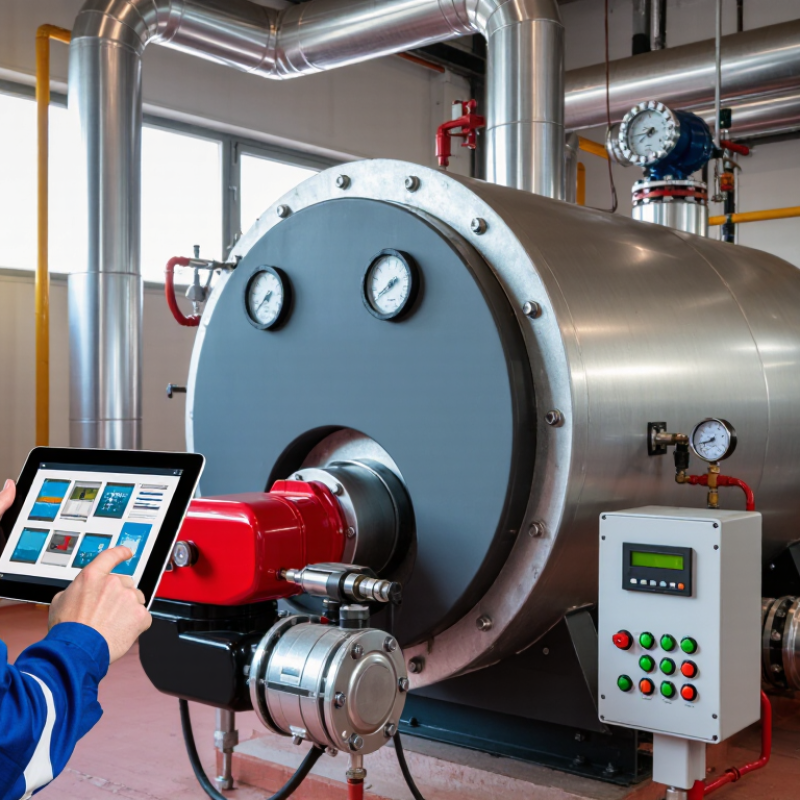
Assess the Building’s Steam Demand and Operating Requirements
Before choosing a natural gas steam boiler, map the building’s actual steam demand. Record peak and typical loads across heating seasons, occupied hours, and process cycles. A school may need heavy morning heat, while a laundry can draw steam steadily throughout the day. Check required pressure, simultaneous equipment use, and how quickly the system must recover after a setback. Small details matter. Boiler capacity based only on floor area can miss a short, sharp peak—or leave the unit oversized for most operating hours.
Inspect the distribution system before treating boiler output as the whole problem. Note condensate return, pipe insulation, steam-trap condition, and any pressure drops between the boiler room and end uses. The U.S. Department of Energy’s Improving Steam System Performance: A Sourcebook for Industry reports that 15% to 30% of steam traps may have failed in a typical industrial system. That figure is not a building-specific prediction, but it shows why a demand survey should include maintenance checks. The estimate is imperfect. Compare measured fuel use and operating logs with the calculated peak load, then consider turndown and standby needs. A carefully sized boiler should meet real peaks without cycling excessively during mild weather.
Compare Boiler Types, Capacities, and Pressure Ratings
Choose boiler type around the load, not the fuel line alone. Fire-tube units often suit steady, moderate steam demand and simpler operation. Water-tube designs can serve higher pressures and changing loads, but need closer attention to water quality and controls. The U.S. Department of Energy’s Improving Steam System Performance sourcebook reports that steam systems use about 37% of manufacturing energy. That figure makes efficiency and load matching worth checking early. A boiler sized only for the busiest hour may cycle inefficiently during ordinary shifts. Real demand is often messier.
Compare rated capacity with measured peak steam use, in pounds per hour, and account for startup and future equipment. Then verify operating pressure at the point of use, including pressure losses through piping and valves. Do not select a pressure rating from a catalog headline. For low-pressure heating applications, ASME Boiler and Pressure Vessel Code Section IV sets a 15-psig limit for steam-heating boilers; process applications may require different code sections and ratings. Pressure is not capacity. A practical review should include a load profile, condensate return, and the pressure needed by each process. A small production line may need less pressure than its boiler room currently supplies. That deserves a second look. DOE’s sourcebook also recommends assessing the entire steam system, since distribution and recovery affect operating performance as much as the boiler itself.
Evaluate Efficiency, Fuel Use, and Emissions
A natural gas steam boiler should be compared by useful steam delivered, not by its nameplate efficiency alone. Check whether the quoted rating reflects steady-state testing or seasonal operation; cycling, blowdown, and distribution losses can reduce real-world performance. DOE’s Improving Steam System Performance sourcebook estimates that steam accounts for about 30% of manufacturing energy use, making system losses worth measuring. Ask for a combustion test showing flue-gas oxygen and temperature, then review condensate return and steam-trap condition. Small details matter. A hot condensate line returning to the boiler is useful evidence, not proof of an efficient system.
Fuel use links efficiency directly to emissions. The U.S. EPA’s 2024 GHG Emission Factors Hub assigns natural gas about 53.06 kg of CO₂ per MMBtu of fuel input. As a simplified comparison, producing the same steam at 90% rather than 80% efficiency requires about 11% less fuel, assuming equal operating conditions. That estimate excludes cycling and distribution losses. Don’t overread it. Ask suppliers for test conditions, turndown range, and expected annual fuel use at your actual load. EPA’s factor covers CO₂ from combustion; it does not capture every operational emission or upstream gas impact. A clean rating can still disappoint when demand varies sharply.
How to Choose a Natural Gas Steam Boiler? - Evaluate Efficiency, Fuel Use, and Emissions
| Illustrative Boiler Efficiency (HHV) | Natural Gas Input per MMBtu of Useful Steam Output | Annual Gas Use* | Estimated Annual CO₂ Emissions* | Fuel Savings vs. 80% Efficiency | What to Evaluate |
| 80% | 1.250 MMBtu | 2,500 MMBtu
Approximately 2.50 million scf | 132.7 metric tonnes | Baseline | May suit some older or simpler installations. Check measured combustion performance, insulation, excess air, and maintenance condition. |
| 85% | 1.176 MMBtu | 2,353 MMBtu
Approximately 2.35 million scf | 124.8 metric tonnes | Approximately 5.9% | Compare verified efficiency at the expected steam pressure and operating load; confirm that the quoted rating uses HHV. |
| 88% | 1.136 MMBtu | 2,273 MMBtu
Approximately 2.27 million scf | 120.6 metric tonnes | Approximately 9.1% | Assess turndown, burner controls, feedwater temperature, blowdown practices, and performance under part-load operation. |
| 90% | 1.111 MMBtu | 2,222 MMBtu
Approximately 2.22 million scf | 117.9 metric tonnes | Approximately 11.1% | Confirm that the efficiency is achievable for the required steam conditions and includes the losses relevant to your installation. |
*Illustrative comparison, not a product rating. Annual figures assume a constant useful steam-output rate of 1 MMBtu per hour for 2,000 equivalent full-load hours. Efficiency is expressed on a higher heating value (HHV) basis. Gas volume uses an approximate heating value of 1,000 Btu per standard cubic foot (scf); actual gas heating value varies by supply. CO₂ estimates use an approximate combustion factor of 53.06 kg CO₂ per MMBtu of natural gas input (HHV). Estimates exclude upstream methane emissions and other pollutants such as NOₓ and carbon monoxide. Actual performance and emissions depend on boiler design, load, controls, fuel composition, maintenance, and local requirements.
Check Installation Needs, Venting, and Safety Standards
Before choosing a natural gas steam boiler, measure the boiler-room doorway, service clearances, floor capacity, and pipe routes. A unit may fit on paper yet block a drain or leave too little room to remove the burner. Confirm gas pressure, electrical supply, make-up water, and condensate handling with a qualified installer. Small details matter. Request a written heat-load calculation and site layout rather than guessing from the old boiler’s capacity.
Venting must match the boiler’s approved configuration, fuel input, and building conditions. Check flue size and material, termination clearances, combustion-air openings, and whether an existing chimney needs inspection. Do not assume an old flue is reusable. NFPA’s analysis of U.S. home structure fires from 2014–2018 estimated 48,530 fires involving heating equipment annually; the category includes many equipment types, not just boilers. This is a useful reminder, not a boiler-specific risk estimate. Verify applicable fuel-gas, mechanical, and boiler codes; ASME Section IV may apply to heating boilers. Before startup, check relief-valve discharge routing, low-water cutoff, and pressure controls. A neat installation can still have poor draft. Ask the technician to document draft readings, flue-gas results, and safety-control tests.
Natural Gas Boiler Venting: What Combustion Produces
This simplified example uses methane, the main component of natural gas. Complete combustion of one mole of methane consumes two moles of oxygen and produces one mole of carbon dioxide and two moles of water vapor.
Installation note: Actual natural gas composition varies. Boiler venting, combustion-air supply, and clearances must follow the appliance instructions and applicable local codes; this reaction is not a vent-sizing guide.
Compare Lifecycle Costs and Select a Suitable Boiler
How to Choose a Natural Gas Steam Boiler?
Compare the cost of producing usable steam, not just the purchase price. The U.S. Department of Energy’s Improving Steam System Performance: A Sourcebook estimates that steam accounts for about 30% of industrial energy use. That makes fuel performance a major lifecycle cost. Estimate annual gas use from your actual steam demand, operating hours, local fuel price, and verified boiler efficiency. Compare efficiency figures on the same heating-value basis. Include installation, water treatment, routine servicing, burner tuning, and the cost of downtime. A cheaper unit may cost more over time. No forecast captures every shutdown.
Check whether the boiler can handle both peak demand and typical low-load operation. Oversizing can increase cycling and fuel waste; undersizing may struggle during production peaks. The U.S. Department of Energy’s Improve Your Boiler’s Combustion Efficiency guidance highlights combustion control and excess-air management as practical efficiency measures. Ask for documented performance at your expected operating range, plus clear maintenance requirements. Then compare total costs over the same service-life period, using realistic gas-price assumptions. That estimate still deserves a second look.
Tips: Request a lifecycle-cost worksheet showing fuel, maintenance, water treatment, and downtime separately. Confirm who will measure efficiency after commissioning, and how often combustion settings will be checked. Keep the assumptions visible.