2026 How to Choose a Stainless Steel Roof Hook?
Choosing a Stainless steel roof hook is not just a matter of picking a shiny fitting. The right hook must suit the roof covering, support system, and installation method. A hook made for tiled roofs may not sit securely beneath a standing-seam panel. Small mismatches can create movement, uneven loading, or damage around the fixing point. Details matter.
In 2026, buyers should compare material grade, dimensions, load information, and the manufacturer’s installation guidance. Stainless steel can resist corrosion, but performance depends on the grade, finish, and exposure conditions. Coastal air, trapped moisture, and contact with dissimilar metals deserve attention. Check the hook’s thickness, bend shape, hole placement, and edge finish against the actual roof structure. A tape measure and a close look at the fixing area can prevent an avoidable mismatch. Not glamorous, but important.
Load ratings also need context. They may depend on the supporting structure, fasteners, spacing, and installation quality—not the hook alone. Ask for clear product data, and confirm that it applies to your roof assembly. If details are missing, pause and ask the supplier or a qualified roofing professional. Guessing is risky. This guide explains how to compare roof-hook designs, assess compatibility, and spot questions worth resolving before purchase. Even a well-made hook can be the wrong choice. That is the part easy to overlook.
What Is a Stainless Steel Roof Hook and How Does It Work?
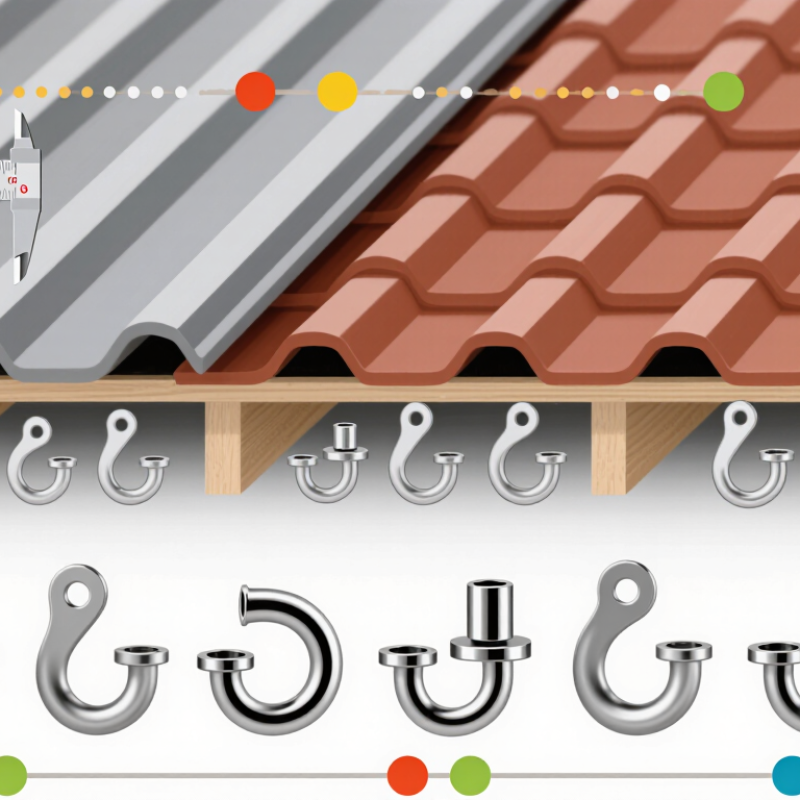
A stainless steel roof hook is a shaped metal support used to connect a roof structure with a solar mounting rail. On tiled roofs, its upper section may sit beneath a tile, while its base is fastened to a rafter or another suitable structural member. The hook creates a fixed point for the rail. It does not hold a panel by itself. The rail and its fasteners complete the load path from the panel to the roof frame.
Simple in appearance. Important in practice. During installation, the hook’s position and height must suit the roof tile, rafter spacing, and rail design. Installers typically lift or adjust nearby tiles, secure the hook with appropriate fasteners, and check that the tile can sit back without being forced. Stainless steel helps resist corrosion, especially in damp or coastal conditions, but the grade and surrounding materials still matter. A metal hook cannot make a poor roof connection safe.
A common assumption is that “stainless” means maintenance-free. Not quite. Water traps, incompatible metals, or damaged roof coverings can still cause problems. The hook should avoid pinching tiles or obstructing drainage, and any disturbed flashing or waterproofing needs careful attention. Small gaps matter. Roof layouts vary, so a detail that fits one tile profile may press hard against another. Checking the actual roof assembly is more reliable than choosing by appearance alone.
Which Roof Types and Profiles Are Compatible With Each Hook Design?
Roof hooks are profile-specific, not universal. For concrete or clay tiles, use a tile hook that passes beneath the tile and fastens into a roof rafter. The tile must sit flat afterward; a raised edge can crack under foot pressure. On asphalt shingles, a flashed, rafter-mounted attachment is typically used instead of a hook gripping the shingle. Shingles are weather covering, not structural anchorage.
Standing-seam metal roofs usually suit seam clamps matched to the seam shape and dimensions. They avoid panel penetration when approved for that seam. Trapezoidal and corrugated metal roofs need brackets shaped for the rib spacing and crest or valley position; fasteners must follow the roof-system requirements. Flat roofs generally use engineered support frames, not conventional tile or seam hooks. This is easy to misread: two roofs that look alike may have different profiles.
Check the roof covering, profile height, rafter location, and hook clearance before ordering. A tile hook must clear the tile without levering against it; a metal-roof clamp must fit the seam precisely.
The National Renewable Energy Laboratory’s 2016 rooftop solar technical-potential report estimated 1,118 gigawatts of U.S. rooftop capacity across varied buildings and roof forms. That scale underscores why one attachment design cannot suit every roof.
Confirm load calculations and installation details with a qualified professional.
Reference: NREL, Rooftop Solar Photovoltaic Technical Potential in the United States, 2016.
How Do Steel Grade, Finish, and Corrosion Resistance Affect Selection?
A stainless steel roof hook should be selected for its environment, not just its label. Grade 304 suits many inland roofs with limited salt exposure. Near the coast, or where winter salts linger, grade 316 usually offers better resistance because it contains molybdenum. That does not make it immune to corrosion. Check the supplier’s material documentation when the installation is exposed or costly to replace. A low price can hide uncertainty about the alloy. Not ideal.
Finish matters, too. A smooth, clean surface is easier to keep free of grime, while rough areas and crevices can hold moisture. Look closely at bends, welds, and the underside of the hook. A bright finish is not proof of a corrosion-resistant grade. Proper cleaning and passivation may help remove surface contamination, but workmanship still counts. Small details matter. Also consider drainage: a hook that traps water may corrode sooner than one that dries quickly. Match the hook and its fasteners where practical, since dissimilar metals in wet contact can create problems. I would not choose by grade alone; roof exposure, finish quality, and installation details all deserve a careful look.
How Should Load Capacity and Installation Requirements Be Evaluated?
A stainless steel roof hook should be selected for the complete load path, not its metal grade alone. Estimate the roof’s snow, wind, and dead loads, then divide them by the number of hooks actually sharing the load. FEMA’s Snow Load Safety Guide (FEMA P-957) gives fresh-snow densities of roughly 3–21 lb/ft³ and settled-snow densities of about 20–40 lb/ft³. A shallow-looking drift can therefore impose a substantial, uneven force. Small details matter. Check the hook’s published allowable load, test conditions, and safety factors; do not treat ultimate strength as a working limit.
Installation must match the structure and roof assembly. ASCE/SEI 7-22 sets out design procedures for wind, snow, and load combinations, but site conditions still matter. Confirm the local design loads, rafter spacing, roof pitch, and likely snow drifting. Fasteners should penetrate structural framing, not just sheathing. Follow the specified fastener type, diameter, embedment, and spacing. A neat-looking installation can still be weak.
Check flashing, gasket compression, and clearance around the hook so water has no easy path beneath the roofing. Stainless steel grades and nearby metals also affect corrosion performance in coastal or damp locations. I still double-check the substrate on older roofs; drawings can be wrong. When the hook maker’s test setup differs from the actual roof, ask a qualified engineer to review the connection before installation.
What Checks Help Match a Roof Hook to a Solar Mounting System?
A stainless steel roof hook must fit the roof and the mounting system as one assembly. Measure the tile profile, batten spacing, and rafter position before comparing hook dimensions. Check that the arm clears the tile without pressing on it; pressure can cause cracking. Confirm the hook base aligns with the rail slot and that the specified fasteners engage the structural member. Small details matter. NREL’s 2023 U.S. Solar Photovoltaic System and Energy Storage Cost Benchmark uses an 8-kWdc residential PV-only reference system. At that scale, checking component compatibility is a practical design task, not just a catalog comparison.
Next, verify the assembly’s tested load capacity against site-specific wind and snow loads. Review the hook, rail, clamp, and fastener combination together; a rating for one part alone may not represent the installed system. UL 2703 covers PV mounting systems and bonding and grounding equipment, so check whether the proposed configuration is within its documented scope. For corrosion resistance, consider exposure: coastal salt and trapped moisture can affect material choices and service life. Stainless steel grade matters. Also check how the hook’s material contacts aluminum rails, and follow the system’s installation guidance for isolating dissimilar metals. A drawing can look convincing, yet still leave questions about tile clearance or fastener placement. Flag those uncertainties before installation.