
Blog

How to Choose the Right Multi Adapter Wiper Blade?

Choosing the right wiper blade starts with a simple question: will its connector fit your vehicle’s wiper arm? A Multi Adapterwiper blade may include several attachment pieces, but that does not make every model universal. Arm styles vary, and the wrong adapter can leave a blade loose, crooked, or difficult to secure. Check your vehicle manual or a reliable fitment catalog, then compare the listed year, make, and model. Measure the existing blade if needed, but use that measurement as a cross-check, not your only guide. Fit comes first.

Next, consider your climate, driving habits, and the blade’s construction. Frequent rain may call for a design that maintains even pressure across the windshield, while winter drivers should check whether the blade suits icy conditions. Look for clear product specifications, durable materials, and installation instructions that match the supplied adapters. A familiar brand can help, but its name alone cannot confirm compatibility. Before installation, inspect the connector and check that it locks firmly onto the arm. Afterward, test the blade with washer fluid and watch for missed areas, chatter, or uneven contact. Small details matter. Even careful checks can miss a mismatch, so recheck the fitment information if the blade does not sit flat. The right choice is the one that fits securely and clears your view consistently, not simply the one with the most adapters.
How to Choose the Right Multi Adapter Wiper Blade?

Understanding Multi-Adapter Wiper Blade Designs

Understanding Multi-Adapter Wiper Blade Designs

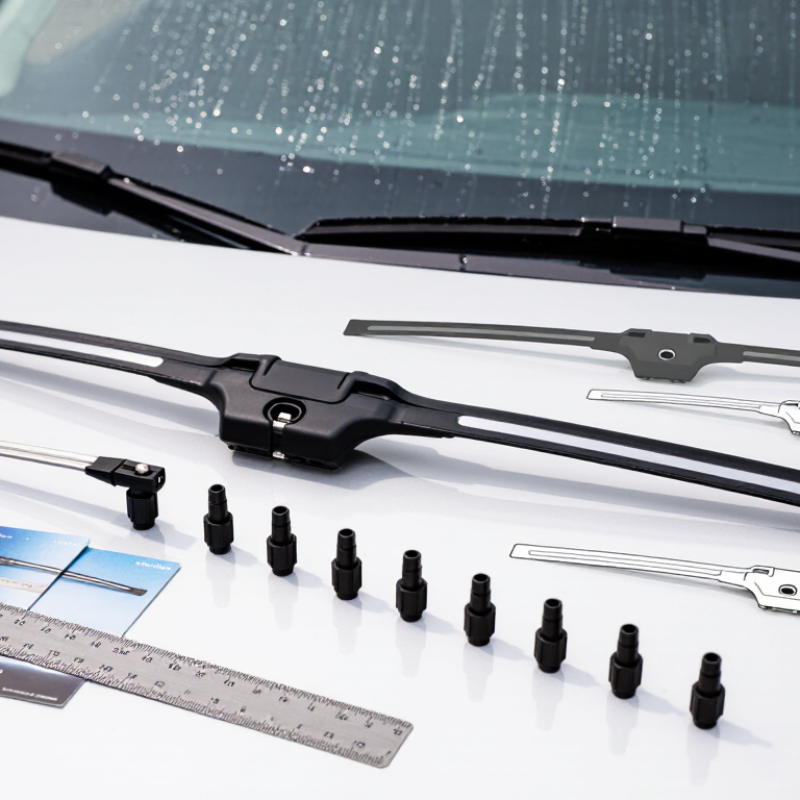
A multi-adapter wiper blade includes interchangeable connectors for different wiper-arm ends. Common designs fit hook, pin, bayonet, or top-lock arms. The adapter must match the arm’s shape and locking method; “multi-fit” does not mean every connection is supported. Small parts matter. A loose fit can cause chatter, uneven pressure, or blade lift at speed.

S&P Global Mobility reported that the average age of U.S. light vehicles reached 12.6 years in 2024. That broad mix of vehicle generations helps explain why one blade package may include several adapters. Check the vehicle’s manual or current fitment guide, then compare the arm with the connector diagram. Don’t rely on appearance alone: two hook arms can differ in width or locking details.

During installation, listen for a clear click and tug the blade gently before lowering it onto the glass. The connector should sit straight, with no rocking or exposed release tab. SAE J903 provides test procedures for passenger-car windshield-wiper systems, but it does not certify every aftermarket adapter as interchangeable. A careful fit check still matters. One caveat: diagrams can be hard to read, and adapters may look nearly identical. If the latch feels forced, stop and recheck the fitment rather than pressing harder.

Identifying Your Vehicle’s Wiper Arm Connector

How to Choose the Right Multi Adapter Wiper Blade?

Identifying Your Vehicle’s Wiper Arm Connector

Before choosing a multi adapter blade, identify the connector on your vehicle’s wiper arm. Common styles include J-hooks, side pins, and push-button fittings. Look closely at where the old blade attaches; dirt or a small plastic cover can hide the shape. A J-hook curves around the connector, while a side pin projects from the arm. Designs can vary by model year and trim, so appearance alone may not settle the question.

Park on level ground, switch off the ignition, and lift the arm carefully. Rest it on a folded towel if needed; a bare metal arm can crack the windshield if it snaps back. Compare the exposed connector with the new blade’s adapters and check the vehicle manual or a reliable fitment guide. I’ve found that a quick glance can be misleading, especially when an old adapter is still attached. Don’t force a fit.

Tips: Photograph the connection before removing the blade. Match the arm itself, not just the old blade. After installation, tug gently to confirm the adapter is locked, then test the wipers with washer fluid. A loose fit needs another check.

Checking Blade Length and Vehicle Compatibility

Choosing a multi-adapter wiper blade starts with checking the correct length. Look in your vehicle manual or a reliable fitment guide for the driver and passenger sides; they may use different sizes. Measure the old blades as a cross-check, but don’t rely on appearance alone. Worn rubber and curved frames can make measuring awkward. A small length difference can affect coverage or cause the blade to touch the windshield edge.

Tips: Check each side separately. Confirm the rear blade size, if fitted. Match the adapter to the wiper arm, not just the blade length.

Even when the length is correct, the connector must suit your vehicle’s arm. Multi-adapter blades include several fittings, but not every fitting works with every arm. Check the vehicle’s year, model, and trim in a fitment guide, then compare the listed connector with the arm on your car. Fitment charts can be imperfect, especially if an arm has been replaced. After installation, gently check that the connector is locked, then test the blade with washer fluid while parked.

How to Choose the Right Multi Adapter Wiper Blade? - Checking Blade Length and Vehicle Compatibility

Vehicle or Wiper Position Common Blade Lengths Connector Types to Check Compatibility Checks Practical Buying Tip
Compact passenger car — driver side About 22–26 in (560–660 mm) J-hook, side pin, pinch tab, or top lock Confirm the exact driver-side length and the arm’s connector style. Do not assume the two front blades are the same length; check the vehicle manual or existing blades.
Compact passenger car — passenger side About 14–20 in (350–500 mm) Often the same connector family as the driver side, but not always Check passenger-side length separately and make sure the blade does not overlap or contact trim. Compare the specified left-and-right blade pair rather than buying two blades of one length.
Sedan or midsize car — front pair Often about 20–28 in (500–710 mm); the pair may use different lengths J-hook, pinch tab, side pin, bayonet, or top lock Verify both lengths and confirm that the included adapter fits each wiper arm. A multi-adapter blade can cover several connector styles, but it is not automatically compatible with every arm.
SUV or crossover — front pair Commonly about 18–28 in (450–710 mm), depending on vehicle J-hook and several proprietary or low-profile arm styles Check for clearance near the hood, windshield edge, and opposite blade throughout the sweep. Use a vehicle-specific fit guide when available, especially if the original arm has an unusual connector.
Hatchback or SUV — rear window Often about 10–16 in (250–400 mm) Rear-specific hook, button, pin, or molded connection Rear arms and blades may use a different attachment from the front blades. Check rear-blade fitment separately; a front multi-adapter blade may not fit the rear arm.
Vehicle with a J-hook arm Use the length specified for the exact position Curved J-shaped hook, commonly secured by an adapter cover or latch Make sure the adapter locks firmly onto the hook and the blade pivots freely. Confirm the hook size and adapter instructions before installation.
Vehicle with a side-pin, pinch-tab, bayonet, or top-lock arm Use the length specified for the exact position Pin, side-release tabs, flat bayonet, or top-mounted locking button Match the arm type to the correct included adapter; connector names can vary by manufacturer. Test that the adapter is fully seated and locked before operating the wipers.

Fitment note: Blade lengths and connector styles vary by vehicle, model year, trim, and wiper position. The ranges above are general examples, not a vehicle-specific fitment guarantee. Check the owner’s manual, a reliable fitment guide, or the markings on the original blades before purchasing.

Matching the Adapter to the Wiper Arm

A multi-adapter wiper blade works only when its connector matches the wiper arm. Check the arm’s exposed end before buying. Common designs include J-hooks, side pins, bayonet fittings, and top-lock arms. They can look similar at a glance. Look closely.

With the old blade removed, note how it attaches and where its release tab sits. A J-hook curves around the connector, while a pin passes through a side opening. Measure only if the fitting is unclear; a ruler can help distinguish pin widths. Compare your observations with the blade maker’s fitment chart or your vehicle manual. Do not choose by blade length alone.

During installation, use the adapter specified for your arm and press until the latch clicks. Give the connector a gentle tug before lowering the blade onto the glass. If it shifts, sits crooked, or leaves a gap, stop and check the adapter again. I’ve seen a nearly correct fitting cause chatter because its locking tab never seated fully. That detail is easy to miss. After fitting both blades, test them with washer fluid and watch for smooth movement across the windshield.

Installing and Verifying the New Wiper Blade

Before installation, compare the new blade’s connector with the adapter on the wiper arm. A multi-adapter blade may include several fittings, but only one should match your vehicle. Check the vehicle manual if the connection is unclear. Lift the arm carefully, and place a folded towel beneath it. The spring-loaded arm can snap back onto the windshield. That can crack the glass.

Remove the old blade by releasing its locking tab, then slide it away from the arm. Fit the selected adapter until it sits flush and locks securely. You should hear or feel a click. Give the blade a gentle pull. It should stay attached without wobbling. Do not force a fitting that resists; a bent tab or wrong adapter can look almost right. It is worth checking twice.

Lower the arm slowly, then run the wipers with washer fluid on a wet windshield. Watch for missed areas, chatter, or streaks. A streak does not always mean poor installation; dirt on the glass or blade may be responsible. Wipe both with a clean, damp cloth and test again. If the blade lifts, shifts, or leaves a wide unwiped patch, stop and recheck the adapter and blade alignment before driving.

How to Choose the Right Multi-Adapter Wiper Blade

Installing and Verifying the New Wiper Blade

Follow the steps in order: match the adapter to the vehicle’s wiper arm, secure the connection, check that the blade pivots freely, carefully lower the arm onto the windshield, then test the wipers on a wet windshield. The bars show step order, not performance scores. Follow the vehicle and blade manufacturer’s instructions.

Go to Top