
China Top 10 Extruded Aluminum Profiles Manufacturers
China’s aluminum extrusion industry is no longer judged by capacity alone. Buyers now examine alloy consistency, dimensional tolerance, die design, surface finish, delivery discipline, and recycling performance. Extruded Aluminum Profiles appear in window frames, solar-panel rails, electric vehicles, heat sinks, and industrial equipment. Each application demands a different balance between strength, weight, corrosion resistance, and cost.
The International Aluminium Institute reported approximately 70.6 million tonnes of global primary aluminum production in 2023. China contributed about 41 million tonnes, according to the U.S. Geological Survey’s Mineral Commodity Summaries 2024. These figures show China’s manufacturing influence, but they do not automatically prove supplier quality. Capacity is only one clue. Certification, testing records, traceability, and verified customer experience matter more.
As aluminum-industry author Mark E. Schlesinger has observed, “Aluminum recycling saves energy and preserves resources.” That principle is especially relevant to modern extrusion supply chains. A responsible manufacturer should explain billet sourcing, alloy control, production tolerances, and scrap recovery clearly. It should also provide practical evidence, not vague promises.
This ranking of China’s top ten manufacturers considers product range, technical capability, export experience, quality systems, customization, and service reliability. The order is not absolute. Public data can be incomplete, and smaller factories may outperform larger names in specific niches. Buyers should still audit samples, inspect facilities, and confirm current certifications before placing large orders. Small details matter. A clean profile edge, accurate wall thickness, and stable anodizing can determine whether an aluminum project succeeds or quietly becomes expensive.
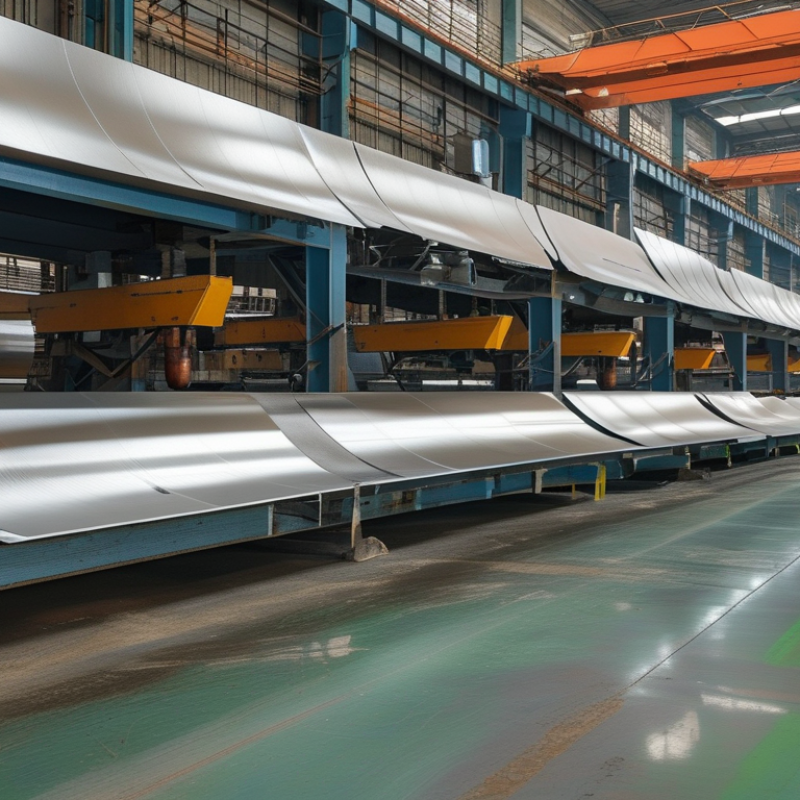
China’s Extruded Aluminum Profile Industry and Market Overview
China’s extruded aluminum profile industry has become a major manufacturing base for construction, transport, solar, and industrial equipment. According to the U.S. Geological Survey’s Mineral Commodity Summaries 2024, China produced about 41 million tonnes of primary aluminum in 2023. This large upstream supply supports competitive billet availability and extensive extrusion capacity.
Industry data from the China Nonferrous Metals Industry Association indicates that China’s aluminum extrusion output exceeded 20 million tonnes in recent years. Construction profiles still consume a significant share, but demand is shifting toward photovoltaic frames, rail transit, electric vehicles, and automated machinery. The China Photovoltaic Industry Association reported strong solar installation growth in 2023, increasing demand for lightweight, corrosion-resistant profiles. Demand is broad.
From a buyer’s perspective, production scale alone cannot define a reliable manufacturer. Die accuracy, alloy consistency, surface treatment, and dimensional inspection directly affect project performance. In factory audits, buyers should examine billet traceability, extrusion temperature records, tensile-test results, and packaging protection. A scratched profile may appear minor, yet it can create costly rework after installation. Energy use also deserves attention. The International Aluminium Institute continues to identify recycling and lower-carbon production as key industry priorities. Some market forecasts seem optimistic, though they often differ in scope and methodology. This gap requires careful comparison rather than blind acceptance.
China Top 10 Extruded Aluminum Profiles Manufacturers - China’s Extruded Aluminum Profile Industry and Market Overview
Anonymous industry benchmark covering common product categories, alloys, tempers, manufacturing capabilities, and end-use applications in China.
| No. | Manufacturer Capability / Product Category | Common Alloy and Temper | Typical Profile Characteristics | Typical Applications | Relevant Production or Quality Indicators |
|---|---|---|---|---|---|
| 1 | Architectural profiles | 6063-T5, 6063-T6, 6061-T6 | Smooth surface, narrow dimensional tolerances, and complex hollow or semi-hollow cross-sections. | Windows, doors, curtain walls, partitions, and building façades. | Die accuracy, straightness, surface quality, anodizing consistency, and powder-coating adhesion. |
| 2 | Industrial structural profiles | 6061-T6, 6082-T6, 6005A-T6 | Higher strength-to-weight ratio with reinforced ribs, channels, beams, and structural sections. | Machine frames, factory automation, platforms, conveyors, and equipment guards. | Yield strength, tensile strength, profile straightness, cut-length accuracy, and load-bearing design control. |
| 3 | Solar mounting profiles | 6005A-T6, 6063-T6, 6061-T6 | Lightweight rails, brackets, clamps, and support channels designed for outdoor exposure. | Rooftop photovoltaic systems, ground-mounted solar arrays, and solar carports. | Corrosion resistance, hole-position accuracy, fastener compatibility, and compliance with project load calculations. |
| 4 | Heat-sink and thermal-management profiles | 6063-T5, 6063-T6 | Thin fins, high surface-area-to-weight ratio, and controlled fin spacing for heat dissipation. | LED lighting, power electronics, inverters, telecommunications, and industrial controls. | Fin uniformity, thermal conductivity, burr control, dimensional stability, and surface flatness. |
| 5 | Transportation profiles | 6061-T6, 6082-T6, 6005A-T6 | Lightweight, weldable, and fatigue-conscious sections for load reduction and structural efficiency. | Rail vehicles, commercial vehicles, trailers, marine structures, and electric-vehicle components. | Mechanical properties, weld-zone performance, dimensional repeatability, and traceability of billets and heat treatment. |
| 6 | Furniture and modular-system profiles | 6063-T5, 6063-T6 | T-slot, square, rectangular, and connector-compatible profiles with attractive visible surfaces. | Workstations, shelving, exhibition systems, cleanrooms, and modular enclosures. | Slot compatibility, profile squareness, surface finish, connector fit, and cut-to-length precision. |
| 7 | Precision and CNC-ready profiles | 6061-T6, 6063-T6 | Machining-friendly sections supplied with controlled wall thickness and repeatable geometry. | Robotics, medical equipment, automation components, instrumentation, and precision assemblies. | CNC machining allowance, concentricity, wall-thickness variation, burr control, and inspection reports. |
| 8 | Large and heavy-wall profiles | 6061-T6, 6082-T6, 6005A-T6 | Large cross-sections, thick walls, and high billet-to-profile reduction requirements. | Infrastructure, industrial machinery, transport structures, and large-scale frames. | Press capacity, billet diameter, extrusion ratio, quench performance, straightening, and heat-treatment uniformity. |
| 9 | Surface-finished profiles | 6063-T5, 6063-T6, 6061-T6 | Profiles supplied with anodizing, powder coating, electrophoretic coating, polishing, or brushed finishes. | Architecture, interiors, consumer products, lighting, and retail fixtures. | Coating thickness, color uniformity, gloss, adhesion, film continuity, and resistance to corrosion and abrasion. |
| 10 | Integrated fabrication and export supply | Common 6000-series alloys; temper selected by design requirements | Extrusion combined with cutting, drilling, punching, CNC machining, assembly, packaging, and logistics support. | OEM components, construction projects, machinery systems, solar projects, and international distribution. | Material certificates, first-article inspection, production traceability, packaging standards, and delivery consistency. |
