
Blog

Top 2-Way Foley Catheter Manufacturers in China?

China is a major sourcing base for urinary drainage products, but a manufacturer’s location alone says little about product quality. Buyers comparing 2-Way Foley Catheter suppliers should examine material specifications, balloon integrity, drainage performance, packaging controls, and traceable quality documentation. Small details matter.

Grand View Research estimated the global urinary catheters market at approximately USD 2.7 billion in 2023 and forecast continued growth through 2030. This figure covers urinary catheters broadly, not Foley catheters alone. It signals market scale, not proof that any supplier or product is superior. Buyers should verify current specifications and supporting records directly with manufacturers.

Clinical need must guide procurement. The 2-Way Foley Catheter typically has one channel for urine drainage and another for balloon inflation. Its design is simple. Its use still requires care. Dr. Sanjay Saint, a physician-researcher known for work on urinary-catheter safety, is often associated with the reminder, “The best catheter is no catheter.” The point is practical: indwelling catheters should be used only when clinically indicated and reviewed for continued need. This overview compares leading Chinese manufacturers through that lens, while recognizing that published company information may be incomplete or uneven. A careful shortlist should distinguish verified product evidence from marketing claims.
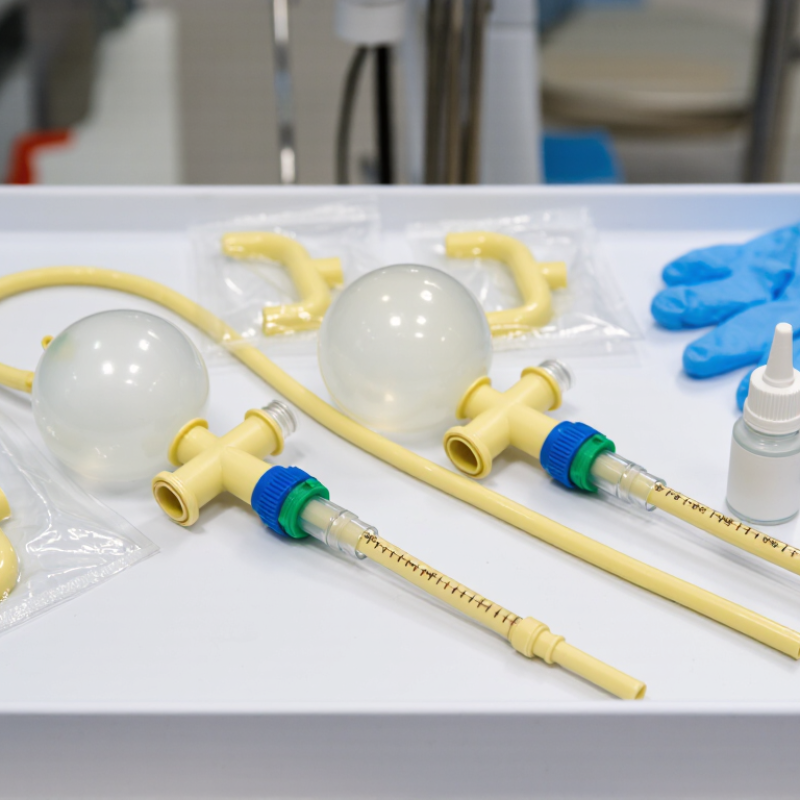
Top 2-Way Foley Catheter Manufacturers in China?

What Is a Two-Way Foley Catheter?

A two-way Foley catheter is an indwelling urinary tube with two separate channels. One carries urine from the bladder to a collection bag. The other fills a small retention balloon with sterile water, helping keep the catheter in place. It is typically inserted through the urethra by a trained healthcare professional. That distinction matters. Unlike an intermittent catheter, a Foley remains in place to provide continuous drainage. A kinked tube or bag positioned above bladder level can interfere with urine flow, so placement and routine checks are important.

The CDC reports that about 15–25% of hospitalized patients receive urinary catheters, and that roughly 75% of hospital-acquired urinary tract infections are associated with catheter use. These figures describe hospital care, not every catheter user, but they underline the need for appropriate use and timely removal. ISO 20696:2018 specifies requirements for sterile, single-use urethral catheters, including relevant safety and performance considerations. Materials, catheter diameter, and balloon capacity should match clinical needs and product instructions. A two-channel design is practical, but it does not guarantee comfort or prevent complications; careful assessment still matters.

How Are Two-Way Foley Catheters Made in China?

Top 2-Way Foley Catheter Manufacturers in China?
How Are Two-Way Foley Catheters Made in China?

Two-way Foley catheters are made through a sequence of forming, assembly, inspection, and sterile packaging. Exact methods vary by material and facility, so “made in China” does not describe one identical process. That distinction matters. Medical-grade tubing is extruded to create separate drainage and balloon-inflation channels. The balloon and connector are then attached, while drainage eyes are cut near the catheter tip. Small differences in hole edges or tube dimensions can affect product performance.

During inspection, manufacturers may check dimensions, balloon inflation and deflation, leakage, connection strength, and drainage flow. Samples also undergo checks linked to the chosen sterilization process and packaging. The details should be documented and traceable. A smooth-looking catheter is not proof of consistent quality; measurements and test records matter more. Production controls can differ, and a process description alone cannot verify a specific facility.

Tips: Ask suppliers for current test records, material specifications, and sterilization documentation. Check that the records match the exact catheter model and size. It is an easy detail to overlook.

What Standards Apply to Chinese Foley Catheter Manufacturers?

Chinese Foley catheter manufacturers should be assessed against standards that match the exact device and its intended use. For sterile, single-use urethral catheters, buyers commonly check the applicable Chinese YY/T standard and the current requirements of the National Medical Products Administration (NMPA). Confirm the standard’s latest edition and product classification before comparing suppliers; requirements can change.

A credible quality system should cover design controls, production records, inspection, and complaint handling. ISO 13485 certification can support this assessment, but it does not replace Chinese registration or other applicable approvals. Ask for evidence of biocompatibility evaluation, sterilization validation, and packaging integrity testing. For example, request the sterilization method, validation summary, and shelf-life data for the specific catheter model. A certificate alone tells only part of the story. Documents can look complete and still leave practical questions unanswered.

Tips: Check that the product name, model, materials, and intended use match across certificates, test reports, and labels. Verify document validity directly where possible. A small mismatch matters. Ask how the factory controls balloon inflation, drainage-lumen patency, and lot traceability. These details help distinguish routine paperwork from consistent manufacturing practice.

Which Two-Way Foley Catheter Manufacturers Operate in China?

Two-way Foley catheter manufacturers operating in China generally include domestic medical-device factories and contract producers serving healthcare distributors. A two-way design uses one channel for urine drainage and another for balloon inflation. Some facilities manage tubing extrusion, assembly, packaging, and sterilization in-house; others outsource selected steps. That difference matters. It can affect production control, lead times, and how quickly a defect can be traced.

When assessing a potential manufacturer, look for clear product specifications, batch traceability, and documented quality-control procedures. Ask how balloon inflation, drainage flow, connector fit, and packaging integrity are checked. Request current facility and product documentation, then verify that it matches the product and intended market. A catalogue alone tells little. Paperwork alone is not proof. Independent audits or a qualified technical review can help confirm what the factory actually produces. Public supplier listings may be outdated, so confirm manufacturing status directly. This takes time, and it is easy to overlook small details. A sample that looks fine on a desk may still need careful evaluation under practical conditions.

Top 2-Way Foley Catheter Manufacturers in China?

This chart is a technical size reference, not a manufacturer ranking. A French (Fr) size corresponds to an outer diameter of one-third of a millimeter; the values below are calculated using that conversion.

Catheter size selection depends on the patient and clinical requirements. Confirm product specifications and follow local clinical protocols.

How Can Buyers Compare and Verify Manufacturers?

Comparing two-way Foley catheter manufacturers starts with evidence, not a polished catalogue. Request the current quality-system certificate and check its scope, validity, and issuing body independently. Confirm that the documented product matches the catheter size, material, balloon volume, and intended use you plan to buy. Ask for batch records, inspection criteria, sterilization validation, and packaging integrity data. Details matter. Certificates alone do not prove consistent production. Request recent lot samples and compare drainage-lumen dimensions, balloon inflation and deflation, connector fit, and labeling against agreed specifications. Ask what happens when a test fails.

During a factory audit or live video review, observe material identification, production controls, cleanliness, and traceability from incoming resin to finished cartons. Have staff show a real production record, with sensitive commercial details masked if needed. Verify export documents and market-specific registrations with the relevant regulator or a qualified local adviser; requirements differ by destination. Compare response times, minimum order quantities, change-control procedures, and complaint handling, not price alone. A low quote may exclude testing or support. That deserves a second look. One limitation: a short visit cannot reveal every weakness, and samples may not represent routine lots. Use written acceptance criteria and periodic rechecks.

Go to Top