Blog

Top Fusion Bonded Epoxy Pipe Suppliers in 2026?

Choosing a Fusion Bonded Epoxy Pipe supplier in 2026 means looking beyond a polished catalog. The coating’s performance depends on details buyers can verify: steel preparation, application controls, coating thickness, holiday testing, and traceable inspection records. Ask how the supplier handles a real production run, not only how its brochure describes one. A clean test report matters. So does a clear answer when a result falls outside specification.

This guide compares suppliers through practical criteria, including manufacturing capability, quality documentation, project experience, delivery reliability, and technical support. It also considers the intended service conditions, because a coating suitable for one pipeline may not fit another. Buyers should check the applicable project requirements and request current evidence rather than relying on broad claims. That extra step can feel tedious. It is still worthwhile.

A named expert quotation can strengthen this introduction, but no verifiable quotation or source was provided. I won’t invent a statement or attribute one to a coatings specialist. Before publication, add a checked quotation from a named expert, with its original source and context. That small omission deserves attention: trust depends not only on technical detail, but also on accurate attribution.

Top Fusion Bonded Epoxy Pipe Suppliers in 2026?

Define Fusion-Bonded Epoxy Pipe and Its Industrial Applications

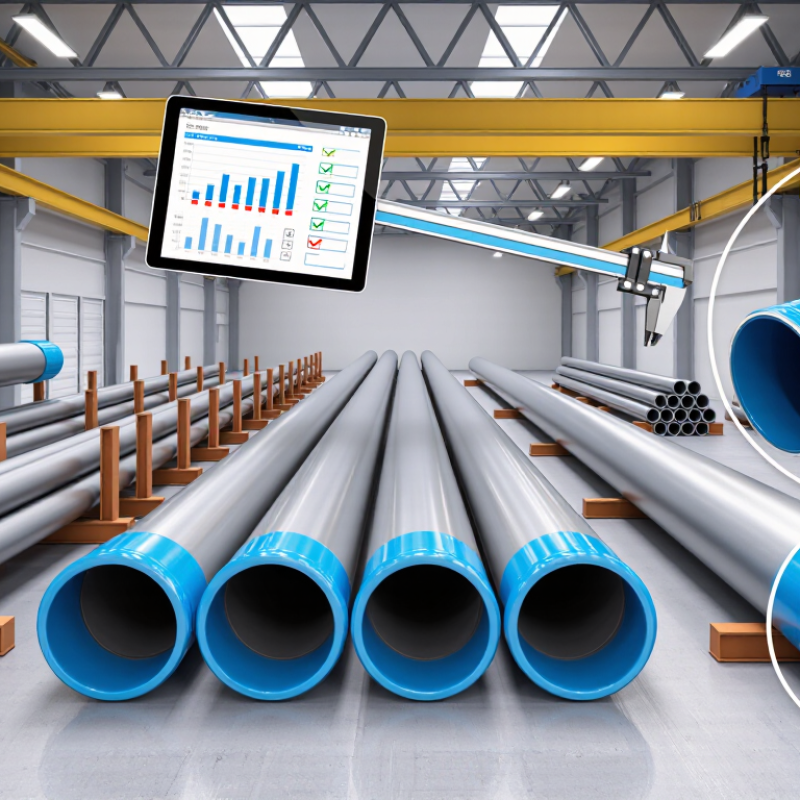
Fusion-bonded epoxy (FBE) pipe is steel pipe protected by a thermoset epoxy coating applied as dry powder. The pipe is cleaned, heated, and sprayed; the powder melts, flows, and cures into a bonded layer. It forms a continuous barrier. Unlike a loose sleeve, FBE adheres directly to prepared steel, making surface preparation and controlled curing essential to performance. No coating is invulnerable.

FBE coatings are used on pipelines carrying water, oil, gas, and industrial fluids. On buried lines, they help limit corrosion from damp soil and salts, while external coatings must also withstand handling during installation. Inside water or process pipes, a suitable formulation can protect the bore and provide a smoother flow surface. Fit matters. Temperature, fluid chemistry, and cleaning procedures can affect suitability, so project conditions should guide the specification.

When evaluating suppliers, request coating-thickness records, adhesion results, holiday-test reports, and traceable inspection documents. Ask how pipe ends are masked and how damaged areas are repaired in the field. These details are easy to overlook. Even careful application has limits. Sharp impacts or poor repairs can expose steel, and FBE cannot compensate for weak pipe design.

Assess Supplier Compliance with AWWA C213 and ISO 21809-2

When comparing fusion-bonded epoxy pipe suppliers in 2026, check which standard matches the pipeline’s service. AWWA C213-22 covers fusion-bonded epoxy coatings and linings for steel water pipe and fittings. ISO 21809-2:2014 addresses external coatings on buried or submerged pipeline systems. They are not interchangeable. A supplier citing one standard does not automatically meet the other.

Ask for the applicable edition, coating procedure, inspection records, and batch traceability. AWWA C213 commonly specifies a 12-mil (305-micrometre) minimum coating thickness; confirm the project specification and governing edition before comparing test results. ISO 21809-2 sets requirements for coating qualification, application, and inspection, so request documented results against the relevant coating class. Look for holiday-test records, adhesion results, and evidence that inspectors checked the actual pipe surface, not just sample panels. Small details matter.

Paperwork can look perfect. The pipe may not be. Compare recorded measurements with the specified limits, and ask how nonconforming sections are repaired and retested. A gap in traceability is not proof of poor coating, but it deserves a clear explanation. Supplier claims should be checked against the standards themselves, not repeated from a brochure.

Supplier Compliance Reference: AWWA C213 and ISO 21809-2

Edition years of the standards commonly used to assess fusion-bonded epoxy pipe coatings.

AWWA C213-22 covers fusion-bonded epoxy coatings and linings for steel water pipe and fittings. ISO 21809-2:2014 covers single-layer fusion-bonded epoxy external coatings for buried or submerged pipeline systems. Edition year is not a supplier-compliance score; verify the applicable standard, current requirements, and supporting test and inspection records for each project.

Compare 2026 Suppliers by Capacity, Certifications, and Delivery Reach

A credible 2026 supplier comparison starts with verified output, not a brochure’s maximum capacity. Ask for recent production records by pipe diameter, coating thickness, and shift pattern. A line rated for large annual volume may not have open slots for your order. Numbers need proof. Check whether the supplier’s quality system includes traceable surface preparation, batch records, and holiday testing. ISO 21809-2 specifies requirements for single-layer fusion-bonded epoxy coatings on pipeline systems; request current certificates and project-specific inspection records, not just a certificate logo.

Delivery reach also needs evidence. Compare quoted lead times with shipping routes, port access, export packaging, and the supplier’s record of on-time dispatch. UNCTAD’s Review of Maritime Transport 2024 reported that seaborne trade grew 2.4% in 2023 and forecast 2.7% growth for 2024, underscoring how freight conditions can affect schedules. This is context, not a guarantee of any supplier’s delivery performance. The World Steel Association’s October 2024 Short Range Outlook forecast global steel demand of 1.75 billion tonnes in 2024 and 1.77 billion in 2025; these figures show market scale, but do not establish coating capacity. One caveat: supplier data can look tidy while actual schedules are not. Ask for recent references and a realistic shipping plan.

Evaluate Coating Quality Against AWWA C213’s 12-mil (300-μm) Benchmark

When comparing fusion-bonded epoxy pipe suppliers in 2026, treat coating thickness as a measured property, not a brochure claim. AWWA C213 sets a 12-mil (300-μm) benchmark for FBE coatings on steel water pipe. Ask for lot-specific dry-film-thickness records and the measurement method. SSPC-PA 2 describes procedures for checking coating thickness with magnetic gauges; readings should cover multiple locations, not one convenient patch. Small detail. A gauge needs calibration.

A compliant average can still hide thin spots near weld seams, bevels, or handling points. Request individual readings, cure-test results, and holiday-inspection records, then compare them with the project specification and applicable C213 criteria. AMPP SP0188 covers holiday testing of protective coatings, but test voltage must suit the coating system. One setting does not fit every job. Ask how the supplier controls surface cleanliness, preheating, powder application, and repairs, since thickness alone cannot confirm adhesion or continuity. A tidy table is reassuring, yet raw records matter more. Even good suppliers can have uneven spots; that is worth acknowledging and correcting before shipment.

Select Suppliers by Project Requirements, Testing, and Lifecycle Cost

Top Fusion Bonded Epoxy Pipe Suppliers in 2026?

Choosing a fusion bonded epoxy pipe supplier starts with the project, not a ranking. Define pipe diameter, operating temperature, pressure, soil conditions, and exposure to chemicals or seawater. A coating suitable for buried water lines may not suit a hot process environment. Put these details in the inquiry so suppliers quote comparable products. Missing information can make a low price misleading.

Ask how surface preparation, coating thickness, curing, and inspection are controlled. Request test records tied to the production batch, not just a general product sheet. Project specifications may call for holiday detection, adhesion checks, or impact testing. Confirm the test method and acceptance limits before ordering. Details matter. Also check how pipe ends are protected during transport, and what repair procedure is supplied for handling damage. This is easy to overlook.

Compare lifecycle cost, not only price per meter. Include freight, installation, inspection, repair materials, expected maintenance, and the cost of downtime. Ask for references from projects with similar service conditions, plus clear warranty terms and delivery schedules. A supplier’s technical response can reveal whether it understands the application. Still, documentation alone cannot prove consistent field performance; verify claims where practical. I would leave time for a technical review, even when the schedule feels tight.

Top Fusion Bonded Epoxy Pipe Suppliers in 2026? — Select Suppliers by Project Requirements, Testing, and Lifecycle Cost

This is a supplier-selection matrix, not a ranked list of named companies. The anonymous supplier profiles describe project-fit categories; verify each bidder’s current product scope, certifications, and test records before award.

Anonymous supplier profile Typical project fit Standards and scope to verify Testing and quality evidence to request Lifecycle-cost considerations Project-selection signal
Municipal water FBE pipe supplier Steel water transmission or distribution pipe where the specified coating system is suitable for the service environment. Confirm the contract’s requirements against AWWA C213, which covers fusion-bonded epoxy coatings for the interior and exterior of steel water pipelines. For potable-water use, verify applicable product and end-use coverage under NSF/ANSI/CAN 61. Request coating-system qualification, production inspection records, coating-thickness measurements, holiday-detection results, and documentation showing that the supplied product and intended use fall within the applicable certification scope. Compare delivered pipe cost with inspection, handling, field-joint coating, repair materials, and any project-specific disinfection or commissioning requirements. Check whether certification scope matches the actual diameter and service conditions. Strong fit when the supplier can document the specified AWWA coating system and applicable drinking-water certification for the exact product and use.
Buried or submerged pipeline coating supplier External protection for buried or submerged steel pipelines, particularly where the project specification calls for a pipeline coating qualification framework. Check whether ISO 21809-2 is specified and applicable; it addresses external fusion-bonded epoxy coatings for steel pipelines in the petroleum and natural gas industries. Do not assume this standard automatically satisfies a water, industrial, or other project specification. Request qualification and production test reports tied to the specified coating class and project requirements. Where applicable, review cathodic-disbondment testing, impact testing, adhesion testing, and holiday inspection, including test method, acceptance criteria, and lot traceability. Evaluate coating price alongside surface preparation, application controls, transport damage risk, field-joint treatment, and repair procedures. Confirm that the proposed system is compatible with the project’s cathodic-protection design. Strong fit when the bidder demonstrates compliance with the project’s exact coating specification and provides traceable, lot-specific quality records.
Large-diameter or high-throughput coating facility Projects with large pipe sizes, high production volumes, demanding delivery schedules, or several pipe lengths and wall thicknesses. Verify that the documented standard and coating procedure cover the actual pipe dimensions, substrate, service, and specified application. Standards are not interchangeable; the purchase specification governs. Review documented process controls for surface preparation, preheating, powder application, curing, inspection, and repair. Ask for sample production records and evidence that inspection equipment is calibrated and that nonconforming pipe is controlled. Assess total delivered cost, including production slots, freight, storage, inspection access, rejected-length replacement, and the cost of schedule delays. Confirm realistic capacity rather than relying only on stated nameplate throughput. Strong fit when capacity is supported by a credible production plan, dimension-specific capability evidence, and agreed inspection hold points.
Supplier with field-joint and repair support Pipeline construction where field joints, coating damage, tie-ins, or site repairs are material parts of the installation scope. Confirm that field-joint and repair procedures are explicitly allowed by the project specification and are compatible with the selected mainline coating. Obtain written procedures and acceptance criteria for the actual site conditions. Request approved repair and field-joint procedures, personnel qualification records where required, inspection forms, holiday-test criteria, and documentation for repaired areas. Consider ASTM G8 for applicable cathodic-disbonding test methods and ASTM D4541 for applicable pull-off adhesion testing; use only where the project specification calls for them. Include crew mobilization, consumables, weather limits, repair time, inspection, and the cost of construction rework. A low pipe price may not be the lowest installed cost if field support is limited. Strong fit when field procedures are approved before construction and support responsibilities, response times, and repair acceptance are contractually clear.
Supplier offering project-specific qualification and traceability Projects with strict owner inspection, multiple coating requirements, audit obligations, or long-term asset records. Require a compliance matrix that maps each project clause to the proposed coating system, test method, acceptance limit, and supplied documentation. Verify certificate validity and scope directly with the issuing body where relevant. Request material and batch traceability, inspection and test plans, instrument calibration records, nonconformance reports, corrective-action records, and final manufacturing data books. Confirm that reports identify the tested product and production lot. Consider audit costs, document-review time, record retention, inspection access, and the future cost of identifying or replacing pipe sections. Clear traceability can reduce investigation effort during maintenance or claims. Strong fit when quality records are complete, internally consistent, and linked from raw materials through coating, inspection, and shipment.
Lowest-bid supplier requiring enhanced due diligence Price-sensitive procurement where the owner can perform thorough technical review and independent inspection. Do not infer compliance from a generic claim such as “FBE coated.” Check the exact standard edition, coating scope, substrate, service, and acceptance criteria stated in the bid and contract. Before award, review representative test reports, inspection procedures, calibration evidence, repair controls, and traceability samples. Define third-party inspection and rejection procedures in the purchase order. Compare evaluated cost rather than bid price alone: include inspection, freight, repair, replacement, schedule risk, field-joint work, and the consequences of coating defects over the design life. Consider only when technical gaps are resolved in writing and the evaluated lifecycle cost remains competitive after risk and inspection costs are included.
Go to Top