
Blog

What Is a Machine Safety Door and How Does It Work?

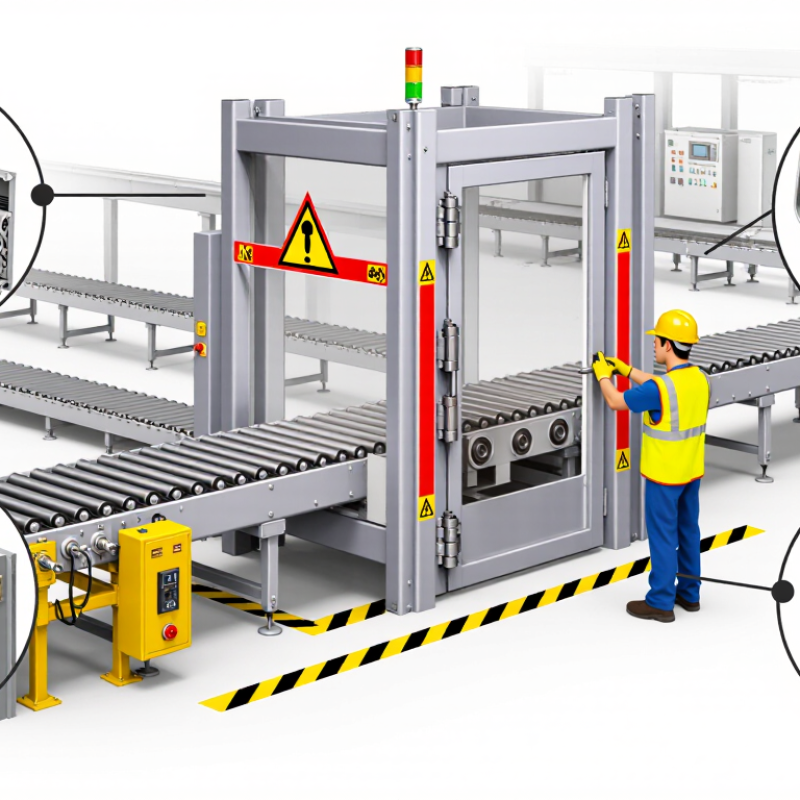
A machine safety door is more than a panel between people and moving equipment. It is a protective barrier that can work with an interlock or guard-locking switch. When the door opens, the system can stop hazardous motion or prevent a machine from starting. Think of a technician reaching for a jammed conveyor: a properly designed door helps keep that reach outside the danger zone. The details matter. A loose hinge, poorly placed sensor, or bypassed interlock can undermine the protection.

The International Labour Organization’s 2023 report, A Call for Safer and Healthier Working Environments, estimates that nearly 2.93 million people die each year from work-related factors. That figure covers all industries and causes, not machine-door incidents alone. Still, it shows why practical safeguards deserve close attention. Human-factors expert James Reason wrote, “We cannot change the human condition, but we can change the conditions under which humans work.” His point applies here: safer conditions depend on design, maintenance, and everyday use.

A safety door must fit the machine’s hazards, access needs, and operating cycle. Its interlock should trigger the intended safety response, and the door should not be treated as a substitute for risk assessment or sound procedures. It is easy to overestimate what one component can do. That deserves reflection. Understanding how a Machine Safety Door works—and where its limits lie—is a useful starting point for safer machine design and operation.
What Is a Machine Safety Door and How Does It Work?

What Is a Machine Safety Door?

A machine safety door is a physical barrier that separates people from moving parts, hot surfaces, flying chips, or other hazards inside equipment. It may be a hinged panel, sliding enclosure, or guarded access gate. The door helps prevent accidental contact during normal operation. It also gives operators a controlled way to reach the machine for setup, inspection, or cleaning.

A safety door often works with an interlock switch. When the door opens, the switch sends a signal to the machine’s control system, which stops hazardous motion or prevents a cycle from starting. Some systems keep the door locked until dangerous movement has stopped. A small click can be a useful sign, but it is not proof that the machine is safe. Interlocks need suitable installation, testing, and maintenance, and they do not replace safe work procedures. A bent hinge or misaligned latch may stop the door from closing correctly. That detail is easy to overlook. Operators should never treat the door as a shortcut around training or approved shutdown steps. Its design should match the machine’s risks, access needs, and operating conditions.

What Components Make Up a Machine Safety Door?

A machine safety door is more than a movable panel. Its frame supports the guard, while solid or transparent panels block access to hazardous motion. The frame must stay rigid under normal use and resist loosening from vibration. The door may swing on hinges or slide along a track. The choice depends on machine layout and available clearance.

The latch keeps the door aligned with its frame. A safety interlock detects whether the door is closed and sends a signal to the machine’s control system. If the door opens, the system can stop or prevent hazardous movement, depending on the machine’s design. Some doors also use guard locking, which keeps them shut until dangerous motion has stopped. Wiring, connectors, and control devices complete the safety circuit. The exact arrangement matters.

The frame carries load. One detail deserves a second look: alignment. A sagging door may not engage its interlock reliably, even if the panel looks intact. Regular checks can reveal loose hinges, damaged seals, or debris in a sliding track. Maintenance staff should follow the equipment maker’s instructions and verify the safety function after adjustments. A door that closes is not automatically a door that protects.

How Does a Machine Safety Door Operate?

A machine safety door controls access to moving parts, such as a spinning cutting tool or a robot arm. When the door closes, a sensor checks its position, and a latch may hold it securely. A safety controller receives that signal and allows hazardous motion only when the guard is confirmed closed. The door is not just a barrier. Its sensor and control circuit are part of the protection.

If someone opens the door during operation, the system sends a stop command or prevents the machine from starting. Some machines stop quickly; others need time for a heavy wheel or spindle to coast down. A locking door may remain shut until sensors confirm that movement has ceased. Opening and closing it should not, by itself, restart the machine. An operator usually needs to reset the system and issue a separate start command. Not every setup works identically.

Small details matter. Dust, a loose hinge, or a misaligned sensor can make a closed door register as open. That may stop production, but bypassing the signal is not a safe fix. Check the door’s alignment, latch, and indicator during routine inspections, and follow the machine’s instructions. A door can look secure while its interlock is not engaging. That is easy to miss.

How a Machine Safety Door Operates

This illustrative sequence shows a guard-locking application. Hazardous motion is permitted only when the door is closed and locked and the required safety conditions are met. The guard remains locked until the machine has reached a safe state.

State values are illustrative: 1 = Yes, 0 = No. Actual safety logic depends on the machine’s risk assessment and safety design.

How Do Interlocks Prevent Access to Moving Machinery?

What Is a Machine Safety Door and How Does It Work?
How Do Interlocks Prevent Access to Moving Machinery?

A machine safety door is a physical barrier around hazardous equipment, such as a robot cell or press. Its interlock monitors whether the door is closed. When the door opens, a safety circuit requests a stop and prevents a new cycle from starting. The U.S. Bureau of Labor Statistics reported 738 fatal work injuries in its 2023 “contact with objects and equipment” category. This broad category is not limited to machinery, but it shows why access control matters.

Some machines take time to stop. A guard-locking interlock can keep the door shut until sensors confirm the hazard has ended. The controller should also prevent unexpected restart when the door closes. Designers need to consider stopping time, reach distance, and the machine’s operating mode. A door switch alone is not a complete safety system, and poor adjustment can undermine protection. Real-world checks matter.

Tips: Test the interlock during planned maintenance. Watch for delayed stopping, loose hinges, or a door that can be opened before motion ends. Never treat a closed door as proof that every hazard has stopped.

What Is a Machine Safety Door and How Does It Work? — How Do Interlocks Prevent Access to Moving Machinery?
Dimension How It Works Safety Purpose
Machine safety door A movable guard, such as a hinged or sliding door, that separates people from hazardous machine areas. Helps prevent contact with hazards such as rotating parts, cutting tools, or robot movement during operation.
Interlock switch A device monitors whether the guard is closed. Opening the guard changes the switch state and sends a signal to the machine’s safety-related control system. Initiates the designed safety response when the guard is opened or is not in its required position.
Stopping hazardous motion The safety control system responds to an open-guard signal by stopping or preventing hazardous motion, according to the machine’s risk assessment and safety design. Reduces the risk of a person reaching moving machinery. The stopping response must be suitable for the specific machine and hazard.
Guard locking For hazards that take time to stop, a guard-locking device keeps the door locked until a defined release condition is met, such as a monitored safe state or elapsed delay. Helps prevent access while hazardous motion or another dangerous condition may still be present. Guard locking is not required for every application.
Restart prevention Closing the door normally restores the guard-closed signal; it should not, by itself, cause an unexpected machine restart when the safety design requires a separate restart action. Helps prevent unexpected start-up while someone may be near or inside the hazard area.
Interlock types Interlocks can use mechanical actuation, coded magnetic or RFID sensing, or other designs. The suitable type depends on the application, environment, and risk assessment. Provides a way to detect guard position while supporting the required level of resistance to foreseeable defeat or misuse.
Fault monitoring Depending on the safety system design, signals may be checked for faults such as a wiring problem, inconsistent channel states, or a device failure. Can help the system detect faults and prevent continued operation when the required safety function cannot be assured.
Installation and validation The guard, interlock, control system, stopping time, and access arrangements should be selected, installed, and validated as part of the machine’s overall risk-reduction measures. Correct alignment, secure mounting, suitable wiring, and periodic checks help ensure the safety function works as intended.
Related standards Relevant standards may include ISO 14119 for interlocking devices associated with guards, ISO 14120 for guards, and ISO 13849-1 or IEC 62061 for safety-related control systems. Applicable requirements depend on the machine, location, and jurisdiction. Standards should be consulted in their current editions by qualified personnel.
Important limitation An interlock is one part of a safety system. It does not replace risk assessment, suitable guarding, safe maintenance procedures, or energy isolation where required. The complete machine safety design must address all relevant hazards and foreseeable access conditions.

Where Are Machine Safety Doors Commonly Used?

Machine safety doors are common wherever workers need access to equipment that can move, cut, press, or eject material. They form a physical barrier around hazardous areas, such as robotic cells, CNC machines, presses, and automated assembly lines. An interlock can signal the control system when a door opens, prompting the machine to stop or enter a safer state. The exact response depends on the equipment and its risk assessment.

Packaging plants use safety doors around conveyors, fillers, and carton-forming machines. Operators may open them to clear a jam or clean a product-contact surface. In food and pharmaceutical facilities, doors can also help separate processing zones and control access during routine cleaning. They are useful, but they do not replace safe work procedures. A door that is bypassed or poorly maintained offers little protection.

You will also find them in welding cells, material-handling areas, and test stations where parts move at high speed. Door placement matters. A gate that blocks a needed maintenance route may tempt workers to leave it open. That is a design problem worth revisiting. Good installations consider visibility, reach, cleaning needs, and how often staff enter the guarded area.

Go to Top