
Blog

What Are Chemical Building Blocks Used For?

Chemical Building Blocks are the molecules used to make larger, more specialized substances. Some become polymers for packaging, fibers, and medical devices. Others help form coatings, adhesives, detergents, fertilizers, or ingredients used in medicines. Their job is often invisible: a clear liquid enters a reactor, then emerges as a resin, powder, or durable film.

The scale is substantial. The OECD’s Global Plastics Outlook reports that global plastic production reached 460 million tonnes in 2019, twice the 2000 level. That figure illustrates one major use of chemical feedstocks, though it does not represent every building block or end product. The International Energy Agency’s The Future of Petrochemicals also describes petrochemicals as a significant source of demand for oil and gas. These reports show why choosing a building block matters: its performance, energy needs, and potential waste can shape products far downstream. Small molecules. Large consequences.

Paul T. Anastas, a chemist and green chemistry expert, co-authored the principle: “It is better to prevent waste than to treat or clean up waste after it is formed.” That idea offers a practical lens for evaluating Chemical Building Blocks. Manufacturers consider cost and performance, but also consistency, process efficiency, and the materials left behind. The picture is not perfectly neat: a useful molecule can still create difficult trade-offs across its supply chain. Understanding what these building blocks do—and how they are selected—helps explain how everyday materials begin.
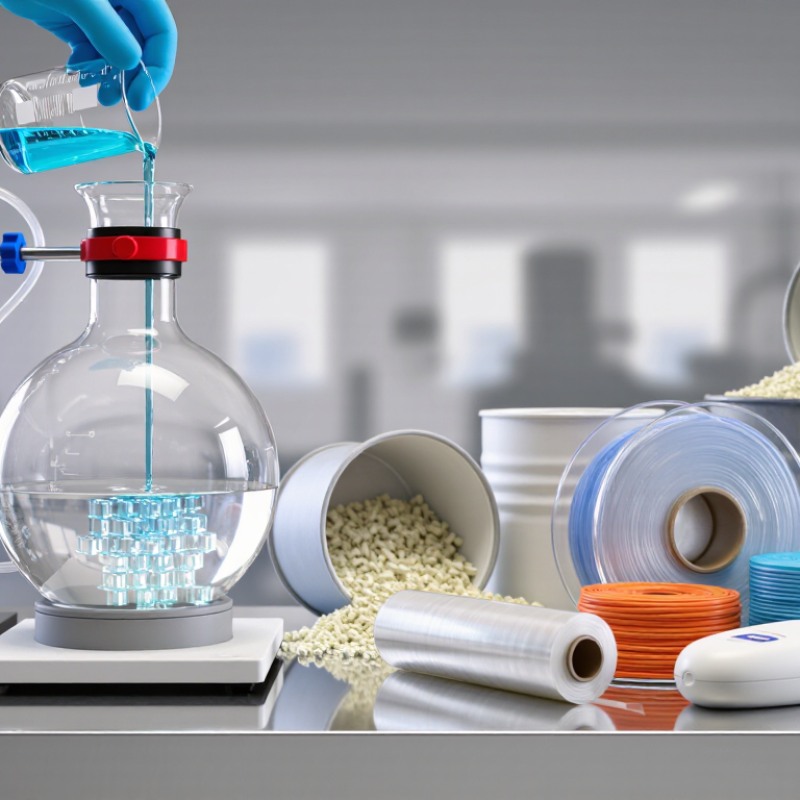
What Are Chemical Building Blocks Used For?

Chemical Building Blocks Defined: Small Molecules Used to Make Complex Products

Chemical building blocks are small molecules used as starting materials for larger, more useful substances. Ethylene can become polyethylene, found in packaging and pipes. Ammonia supplies nitrogen for fertilizers, while methanol helps make resins and coatings. These molecules are not finished products. They are more like carefully chosen ingredients, transformed through controlled reactions into materials with specific properties.

The scale is substantial. The OECD’s Global Plastics Outlook reports that global plastics production rose from 234 million tonnes in 2000 to 460 million tonnes in 2019. Many plastics begin with chemical building blocks such as ethylene and propylene. The International Energy Agency’s Future of Petrochemicals report also notes that petrochemicals are expected to drive more than a third of oil-demand growth through 2030. Small molecules, large supply chains. Still, production volume alone says little about a material’s full footprint. A useful building block must also perform reliably, use resources efficiently, and fit the product’s end-of-life plan. That last part is often harder than it sounds.

Feedstocks to Intermediates: Petrochemicals Use 12% of Oil Demand (IEA, 2018)

Chemical building blocks are the basic molecules used to make plastics, synthetic fibers, coatings, detergents, and many other materials. Refineries and gas-processing plants supply feedstocks such as naphtha, ethane, and propane. Chemical processes turn these into intermediates, including ethylene and propylene, which manufacturers then transform into useful products. Small molecules, broad reach.

The International Energy Agency’s 2018 report, The Future of Petrochemicals, estimates that petrochemical feedstocks accounted for about 12% of global oil demand. That figure describes oil used as a raw material, not simply fuel burned for energy. The IEA also projected petrochemicals would drive more than one-third of oil-demand growth to 2030. These numbers help explain why oil use is not only about transport. A portion becomes material in pipes, packaging, clothing, and insulation. The distinction matters, though feedstock accounting can be easy to overlook.

Tips: When comparing energy statistics, check whether the report measures feedstock, fuel, or both. For a practical example, trace a plastic container backward: its material may begin as a refinery feedstock, pass through several chemical intermediates, then become resin. Check the denominator. This chain is efficient in some ways, but it also makes material demand harder to reduce than a simple fuel switch.

What Are Chemical Building Blocks Used For?

From feedstocks to intermediates: petrochemicals accounted for about 12% of global oil demand, according to the IEA (2018).

Oil-derived feedstocks such as naphtha and LPG can be processed into chemical intermediates, including ethylene and propylene. These intermediates are used to make materials such as plastics, fibres and resins. The 88% figure is the remainder of total oil demand.

Source: International Energy Agency, The Future of Petrochemicals (2018).

From Monomers to Materials: Plastics Use May Reach 1,231 Mt by 2060 (OECD)

Chemical building blocks are small molecules used to make larger materials. In plastics, examples include ethylene and propylene, which can join into long polymer chains. Those chains become packaging films, pipes, appliance parts, and fibers. Small units. Big footprint. The OECD projects that global plastics use could reach 1,231 million tonnes by 2060. This is a forecast, not a certainty; demand, policy, technology, and reuse could change the path.

The scale matters because plastics serve very different lifetimes. A pipe may stay in use for decades, while a wrapper can be discarded in minutes. A tonne of plastic is not automatically a tonne of waste, but short-lived products can become waste quickly. Designing for durability, repair, and recycling can help, though recycling alone cannot solve every collection or material challenge. Numbers can hide unevenness. Feedstock choices and energy use also shape impacts, so the molecule itself does not tell the whole story.

Tips: When comparing materials, check what they are made from, how long they are used, and whether local systems can recover them. Treat long-range forecasts as signals for planning, not promises.

Uses in Fertilizers, Medicines, and Electronics: Key Chemical Pathways

Chemical building blocks are substances that carry atoms or functional groups into larger products. In fertilizers, ammonia provides a key pathway to nitrogen nutrients. It is made from nitrogen in air and hydrogen, then converted into compounds such as urea or ammonium nitrate. Oxidation can also turn ammonia into nitric acid, an ingredient in several fertilizer processes. Phosphate minerals are treated to produce plant-available phosphate, while potassium salts supply another essential nutrient. Small changes matter. Soil, climate, and crop needs affect how these nutrients are applied.

Medicines often begin with a simpler molecule that chemists modify through controlled reactions. They may add or change a functional group to influence solubility, stability, or how a molecule interacts with the body. Each step requires testing, purification, and careful measurement of impurities. A useful pathway is not automatically a safe medicine; biological testing and clinical evaluation remain essential. The route is rarely simple.

Electronics depend on exceptionally pure materials and precisely controlled chemical processes. Silicon is purified and formed into wafers, then small amounts of selected elements are introduced to change how it conducts electricity. Other chemicals help deposit thin films, clean surfaces, or selectively remove material during fabrication. A trace contaminant can affect performance. It is tempting to describe these processes as neat recipes, but real production involves trade-offs, monitoring, and occasional adjustments when materials behave differently than expected.

Industrial Scale and Footprint: Chemicals Are the Largest Industrial Energy User (IEA)

Chemical building blocks are basic substances used to make plastics, fertilizers, detergents, and many other products. Their production has a large energy footprint. The International Energy Agency’s 2018 report, The Future of Petrochemicals, identifies chemicals as the largest industrial energy consumer. It estimates that chemical production uses about 10% of global final energy demand. That is substantial. Energy heats reactors, separates mixtures, and drives other demanding processes. Some raw materials also become part of the finished product, so their energy value is not captured by factory fuel use alone.

This distinction matters when assessing the sector’s footprint. A plant may burn fuel for steam while also using oil or gas as feedstock. The IEA report notes that petrochemicals are a major driver of future oil demand, linking everyday materials to energy choices made upstream. For operators, practical improvements can include recovering heat from hot process streams and reducing losses during separation. Results depend on the process and local energy supply. The accounting is not always straightforward. A lower-energy step at one site may shift impacts elsewhere, so useful comparisons need clear boundaries and reliable measurements.

What Are Chemical Building Blocks Used For? — Industrial Scale and Footprint: Chemicals Are the Largest Industrial Energy User (IEA)

Building block Typical feedstock or production route Major uses Industrial scale Main energy or footprint connection
Ethylene Commonly made by steam cracking hydrocarbon feedstocks such as ethane or naphtha. Polyethylene, ethylene oxide, ethylene glycol, and other chemicals used in packaging, pipes, insulation, and textiles. A high-volume petrochemical intermediate used across many material supply chains. Steam cracking requires substantial heat. The footprint depends on the feedstock, process efficiency, and energy source.
Propylene Produced mainly as a co-product of steam cracking and fluid catalytic cracking, and through dedicated production routes. Polypropylene, propylene oxide, acrylonitrile, and chemicals used in packaging, vehicles, appliances, and fibres. A major building block for plastics and a wide range of industrial chemicals. Its footprint is linked to the energy used in refining and petrochemical processing, as well as the route used to produce it.
Benzene, toluene, and xylenes (BTX) Recovered mainly from petroleum refining and petrochemical processes. Benzene is used to make products such as styrene and phenol; toluene is used in chemical manufacturing; xylenes are used to make purified terephthalic acid and other products. Core aromatic intermediates used in plastics, synthetic fibres, resins, and other materials. Separation and conversion processes consume energy; associated emissions also depend on feedstock and process configuration.
Ammonia Made from nitrogen and hydrogen. Hydrogen is commonly produced from natural gas, although other production routes exist. Primarily used for nitrogen fertilizers; also used to produce nitric acid and other chemicals. A large-volume basic chemical central to fertilizer supply chains. Hydrogen production and ammonia synthesis require significant energy. Emissions depend strongly on the hydrogen source and energy supply.
Methanol Usually produced from synthesis gas made from natural gas or coal; it can also be made from other carbon-containing feedstocks. Used to produce formaldehyde, acetic acid, and other chemicals; also used in some fuel and fuel-blending applications. A widely used chemical intermediate and feedstock for multiple downstream products. The production route determines much of its energy use and greenhouse-gas footprint, particularly the source of synthesis gas.
Chlorine and sodium hydroxide Co-produced by electrolysis of brine in the chlor-alkali process. Chlorine is used in water treatment and chemical manufacturing; sodium hydroxide is used in pulp and paper, alumina, soaps, and chemical processes. Essential inorganic building blocks serving many sectors, including water, materials, and manufacturing. Electrolysis requires substantial electricity, so the carbon intensity of the power supply is an important footprint factor.
Sulfuric acid Usually produced by oxidizing sulfur dioxide and absorbing it in water; sulfur dioxide commonly comes from sulfur or sulfur-containing process streams. Used in fertilizer production, metal processing, petroleum refining, and chemical manufacturing. One of the most widely used industrial chemicals and a key input to several large manufacturing chains. Production involves process heat and can recover energy; the overall footprint varies with the sulfur source and plant design.
Polyethylene and polypropylene Made by polymerizing ethylene and propylene, respectively. Used in packaging, household goods, pipes, automotive components, and many other products. Among the most widely used commodity plastics, connecting basic petrochemicals to everyday material applications. Footprint includes production energy and feedstock emissions; end-of-life management and recycling also affect lifecycle impacts.

Industrial context: The International Energy Agency identifies chemicals and petrochemicals as the largest industrial energy-consuming sector. Energy use and emissions vary by product, production route, plant efficiency, feedstock, and electricity source. Sources: International Energy Agency, The Future of Petrochemicals (2018) and Energy Technology Perspectives; standard industrial process descriptions for the production routes and uses listed above.

Article Source:

Go to Top