
Blog

Why Choose a Rotary Pouch Packing Machine?

Why Choose a rotary pouch packing machine?

Flexible packaging is changing quickly. According to PMMI’s 2023 State of the Industry report, U.S. packaging machinery sales reached approximately $10.2 billion in 2022. The report also identifies automation, labor shortages, and flexible formats as continuing industry pressures. These conditions make the rotary pouch packing machine worth serious attention.

A rotary pouch packing machine can fill, seal, and discharge several pouches during one rotating cycle. Picture a compact stainless-steel platform, moving pouches through controlled stations with measured timing. This design can support stable output, repeatable sealing, and fast format changes when properly configured. Mordor Intelligence reports continued growth in the global pouch packaging market, driven by convenience, portion control, and material efficiency. However, market growth does not guarantee a suitable machine.

John R. Henry, author of Packaging Machinery Handbook, emphasizes that “packaging machinery is a system, not merely a machine.” That warning matters. A rotary pouch packing machine must match the product’s flow, pouch material, filling accuracy, cleaning routine, and operator skill. Real factory experience often reveals small weaknesses first. A narrow sealing window can create waste. A difficult changeover can consume an entire shift.

The technology is capable. It is not magical.

Buyers should compare verified production trials, service response times, spare-part availability, and total ownership cost. PMMI data provides useful market context, while supplier testing provides machine-specific evidence. Some performance claims still need questioning. A careful decision balances speed with reliability, hygiene, maintenance, and future product changes.
Why Choose a Rotary Pouch Packing Machine?

What Is a Rotary Pouch Packing Machine?

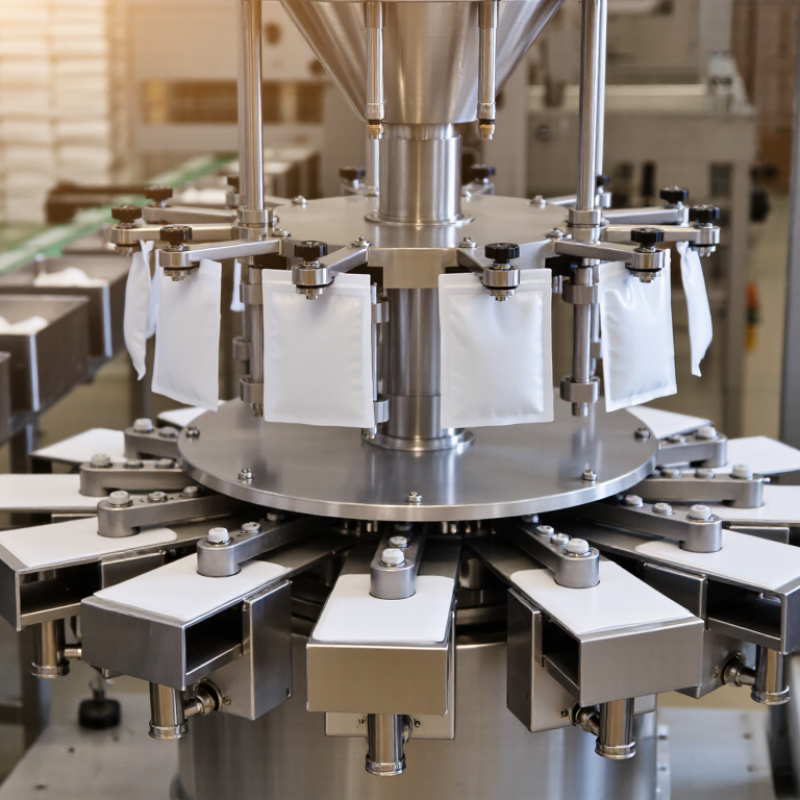
A rotary pouch packing machine is an automated system that fills and seals pre-made pouches around a rotating circular platform. Unlike a continuous bag maker, it handles individual pouches through several controlled stations. Empty pouches enter at one point. Grippers hold them firmly as the turret turns. The machine may open, fill, settle, seal, inspect, and discharge each pouch. This layout keeps operations organized and visible.

Depending on its configuration, the filler can measure powders, granules, liquids, or small solid products. Sensors check pouch presence and sealing-jaw temperature. Pneumatic or servo-driven movements manage opening and sealing with repeatable timing. Operators can adjust fill volume, sealing pressure, dwell time, and conveyor speed through a control panel. In daily production, clean changeover matters as much as speed. Residue around the pouch opening can weaken a seal. A careful operator notices this early.

The machine suits many pouch formats, including stand-up, flat, and zipper styles. Its output depends on product behavior, pouch material, and station settings, not only motor speed. That detail is easy to overlook. Reliable performance comes from validated settings, routine seal checks, and documented maintenance. No machine removes every risk. Film wrinkles, inconsistent powder flow, or a misaligned gripper can still interrupt production. Trial runs should confirm weight accuracy, seal strength, and safe operation before regular use.

Why Choose a Rotary Pouch Packing Machine?

A rotary pouch packing machine is an automated system that indexes pre-made pouches through multiple stations for pouch opening, product filling, sealing, coding, and discharge. The chart shows representative production capacities commonly specified for standard rotary pouch packing configurations.

Actual output depends on pouch size, product characteristics, filling accuracy, sealing requirements, and the number of filling or dosing stations. Rotary systems are selected when consistent sealing, repeatable dosing, reduced manual handling, and higher throughput are required.

How Does a Rotary Pouch Packing Machine Work?

A rotary pouch packing machine works through a circular sequence of synchronized stations. Empty pouches enter the magazine and move by grippers around a rotating turret. Each station performs one task: pouch opening, product filling, air removal, sealing, coding, and discharge. Servo motors control timing, while sensors check pouch presence and jaw temperature. If a pouch is missing, the system can stop filling that station.

For powders, auger fillers measure volume. For snacks, multihead weighers release a target weight. Liquids usually require piston or pump fillers. The sealing jaws then apply controlled heat and pressure. In real production, small changes matter. Film thickness, humidity, and product dust can affect seal quality. PMMI’s 2024 State of the Industry report valued U.S. packaging machinery shipments at approximately 11.3 billion dollars in 2023. This growth reflects demand for faster, flexible automation, but speed alone is not enough. A poorly adjusted machine creates waste quickly.

Tips: Test the actual pouch film before purchase. Record fill accuracy, seal strength, and changeover time. Keep the sealing area clean. Operators should inspect rejected pouches, not only count them. A rotary machine may reach high cycle rates, yet real output often falls during cleaning and format changes. That gap deserves honest measurement.

What Products and Pouch Types Can It Handle?

A rotary pouch packing machine earns attention through its flexibility. Its real value lies in handling different products and pouch formats with controlled changeovers. PMMI’s 2023 State of the Industry report valued U.S. packaging machinery shipments at approximately 10.2 billion dollars. That investment reflects a practical need for adaptable equipment.

These machines can pack powders, granules, snacks, coffee, pet food, frozen vegetables, sauces, and viscous creams. Product behavior matters. Auger fillers suit powders, while multihead weighers handle nuts, confectionery, and irregular pieces. Pumps support liquids and thicker sauces. Common pouch formats include three-side-seal, stand-up, zipper, quad-seal, and some spouted designs. Pouch width, film stiffness, and opening style must match the machine’s grippers and sealing system.

Small detail. Large consequence.

The Flexible Packaging Association’s 2024 industry report placed U.S. flexible packaging sales near 40 billion dollars in 2023. This supports continued demand for efficient pouch production, but market growth does not make every rotary machine universal. Powder dust can contaminate seal areas. Sticky sauces may slow release. Narrow zippers can misalign during fast feeding. Operators should test actual products, pouch materials, and filling weights before purchase. That step is often underestimated. A machine may handle ten pouch types in a brochure, yet perform reliably with only six on a busy production line. Configuration, cleaning access, and changeover time deserve equal attention.

Why Choose a Rotary Pouch Packing Machine? - What Products and Pouch Types Can It Handle?

Typical product and pouch capabilities of a rotary premade-pouch packing system

Product Category Typical Products Suitable Filling Method Indicative Fill Range Compatible Pouch Types Key Handling Considerations
Powders Flour, spices, seasoning, milk powder, detergent powder, protein powder Auger filler 10 g–2,000 g Flat pouch Stand-up pouch Zipper pouch Dust control, auger design, product density, and anti-bridging measures affect accuracy and cleanliness.
Granules and Dry Solids Rice, beans, seeds, nuts, snacks, pellets, hardware components Multihead weigher or linear weigher 20 g–5,000 g Flat pouch Stand-up pouch Gusseted pouch Particle size, bulk density, fragility, and the number of weighing heads influence speed and accuracy.
Liquid Products Water, juice, cooking oil, liquid detergent, shampoo, sauces Piston pump or flowmeter filler 20 ml–2,000 ml Stand-up pouch Spouted pouch Flat pouch Viscosity, foaming, temperature, and drip prevention determine the appropriate pump and nozzle configuration.
Viscous and Semi-Liquid Products Honey, jam, ketchup, mayonnaise, cream, gel, concentrated sauces Piston pump or servo-driven pump 30 g–2,000 g Stand-up pouch Spouted pouch Zipper pouch Heating, agitators, large-diameter valves, and anti-drip nozzles may be required for high-viscosity products.
Irregular and Solid Pieces Dried fruit, confectionery, pet treats, frozen food pieces, pasta, small parts Multihead weigher or combination weigher 30 g–3,000 g Stand-up pouch Zipper pouch Gusseted pouch Product shape, breakage risk, pouch opening size, and drop height should be matched to the product.
Mixed Products Trail mix, cereal blends, snack assortments, soup mixes, promotional kits Multiple weighing or combination weighing system 50 g–3,000 g Stand-up pouch Zipper pouch Window pouch Separate hoppers and controlled discharge help maintain the desired product ratio and reduce segregation.
Non-Food Products Pet food, cat litter, wet wipes, cosmetic accessories, medical consumables Weigher, auger filler, pump, or counting system 10 g–5,000 g Flat pouch Stand-up pouch Zipper pouch Material compatibility, hygiene requirements, counting accuracy, and sealing integrity must be considered.
Common Pouch Structures Premade laminated or mono-material pouches designed for heat sealing Automatic pouch pickup, opening, filling, sealing, and discharge Approx. 80–320 mm pouch width Flat pouch Stand-up pouch Zipper pouch Spouted pouch Actual dimensions depend on the machine model, pouch material, zipper position, spout format, and sealing requirements.

Note: The ranges above are typical planning references rather than guaranteed specifications. Final performance depends on product characteristics, pouch dimensions and material, filling system, sealing temperature, machine configuration, and required production speed.

What Are Its Main Advantages for Packaging Operations?

Why Choose a Rotary Pouch Packing Machine?

A rotary pouch packing machine can improve consistency across busy packaging operations. In my experience, its strongest advantage is repeatable pouch handling. Each cycle moves pouches through filling, sealing, coding, and discharge with controlled timing. This reduces uneven fills and weak seals. It also supports several pouch formats, depending on the machine’s tooling and configuration. Operators can monitor the sealing area, check sample weights, and adjust settings before waste grows. The result is a cleaner workflow and more predictable output.

Automation can reduce repetitive labor and improve workplace organization. A well-adjusted machine handles steady production while staff focus on material checks and quality records. Changeovers may also become faster, but only when the team follows a clear setup procedure.

A rushed changeover can create misaligned pouches, film waste, or missed defects. That limitation matters. Rotary equipment is not a magic fix. It needs preventive maintenance, accurate measurements, and trained operators. Actual performance depends on pouch material, product flow, sealing temperature, and production goals.

Tips: Keep a small sample from every setup. Check seal strength, fill accuracy, and pouch appearance at regular intervals. Clean product-contact areas carefully. Record adjustments instead of relying on memory. This simple habit often reveals recurring faults earlier. Also, allow extra time for training. The fastest machine can perform poorly with unclear instructions. Review the process after the first production run, because practical conditions may differ from planning assumptions.

How Should You Choose the Right Rotary Pouch Packing Machine?

Choosing the right rotary pouch packing machine starts with the product, not the advertised speed. Powder, granules, liquids, and fragile pieces require different dosing systems. Confirm pouch width, length, film structure, seal area, and target weight before requesting quotations. The Flexible Packaging Association reported that the U.S. flexible packaging market reached approximately $39.5 billion in 2022. That scale reflects strong demand, but it does not make every machine suitable.


Ask for a documented production trial using your actual product and film. Measure seal strength, filling accuracy, dust control, and rejected pouches. PMMI’s 2024 packaging machinery research identifies labor availability, automation, and operational flexibility as major investment concerns. Therefore, evaluate servo-driven dosing, automatic film tracking, quick-change tooling, and remote diagnostics. A machine producing 80 pouches per minute may underperform if changeovers take forty minutes. Small details matter.

Inspect the sealing jaws closely. Uneven pressure can create weak corners and hidden leaks. Check whether operators can clean contact surfaces without complicated disassembly. Energy use, compressed-air demand, spare-part access, and training should enter the cost model. Smithers’ flexible packaging forecasts also point toward continued material innovation, so test recyclable or thinner films before making promises.

I would not select equipment from speed alone. That is an easy mistake. Real output depends on uptime, product behavior, maintenance discipline, and operator experience. Ask for verified data, not optimistic estimates.

Go to Top