
Why Is an Inverter Transformer Used?
As renewable generation grows, the equipment connecting inverters to the grid matters more. IRENA’s Renewable Capacity Statistics 2025 reports that renewables added 585 gigawatts of capacity worldwide in 2024, representing 92.5% of total new power capacity. That scale brings a practical question into focus: why is an Inverter Transformer used, and what does it do between a power-electronic converter and the grid?
An inverter produces electricity with characteristics that may differ from the voltage and connection requirements of the network. An Inverter Transformer can raise or lower voltage, provide electrical isolation, and help establish a suitable grid connection. Its design also affects losses, thermal performance, fault behavior, and harmonics. The right choice depends on inverter topology, power rating, operating conditions, and applicable grid requirements. There is no universal transformer for every project.
The wider transition provides useful context. In the IEA’s Renewables 2023 report, Executive Director Fatih Birol said, “The world is set to add more renewable power in the next five years than has been installed since the first commercial renewable power plant was built more than 100 years ago.” That forecast is not a transformer specification. It does, however, underline why dependable grid interfaces deserve careful engineering. A transformer is not a magic box. Its benefits depend on correct sizing, insulation coordination, cooling, and protection. Even small design compromises can matter. This article examines the transformer’s role, key technical functions, and the trade-offs behind selecting one.
What Is an Inverter Transformer?
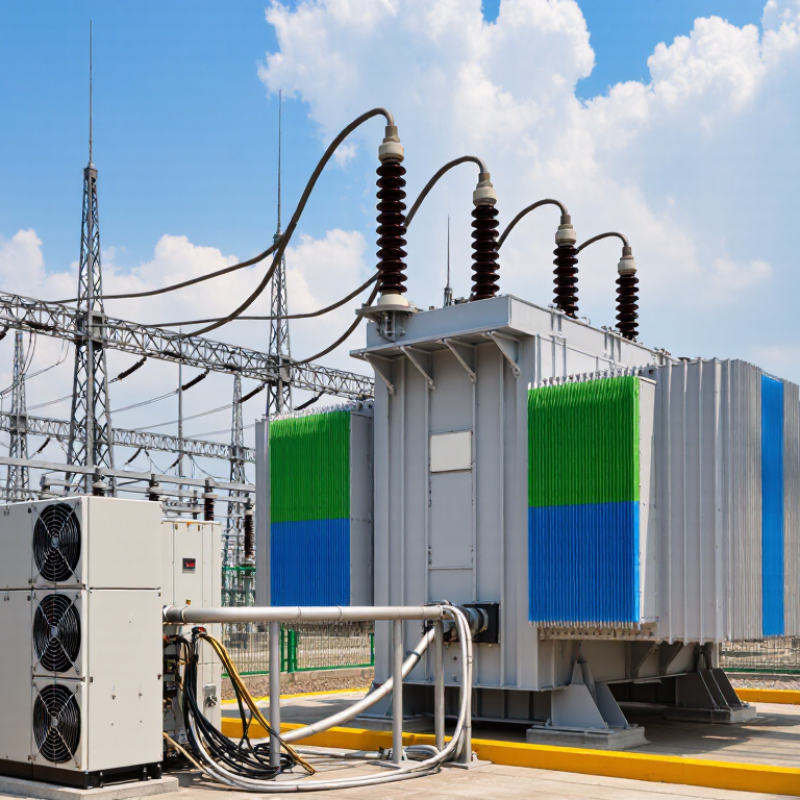
An inverter transformer is a transformer used with an inverter, a device that converts direct current into alternating current. The transformer transfers energy between separate windings through a changing magnetic field. Depending on its design, it can raise or lower voltage and provide electrical isolation between circuits. These functions are useful when connecting batteries, solar equipment, or other DC sources to loads that need AC power.
Not every inverter contains a transformer. Some use transformerless designs, while others include one inside the unit or connect to an external transformer. In a workshop, for example, a transformer may adapt an inverter’s output to suit equipment with a different voltage requirement. Its size, insulation, cooling method, and operating frequency all affect performance. Small details matter.
Many modern systems switch power at high frequencies, allowing smaller magnetic components. Other applications use larger transformers operating at the supply frequency. A qualified designer checks voltage, power rating, waveform, and expected load before choosing a type. The transformer does not automatically improve every aspect of power quality; results depend on the complete inverter system. That distinction is easy to overlook. During operation, heat and vibration can offer practical clues, but they do not replace proper electrical testing.
Why Is an Inverter Transformer Used? - What Is an Inverter Transformer?
| Aspect | What the Inverter Transformer Does | Why It Is Useful | Important Consideration |
|---|---|---|---|
| Voltage matching | Steps the inverter’s AC voltage up or down to suit a load, distribution system, or grid connection. | Helps connect equipment operating at different voltage levels. | The transformer ratio and ratings must match the inverter output and the connected system. |
| Galvanic isolation | Separates the inverter-side winding electrically from the load- or grid-side winding while transferring energy magnetically. | Can help meet system isolation requirements and reduce the transfer of certain common-mode disturbances. | Isolation does not replace proper grounding, protective devices, or compliance with applicable electrical codes. |
| Grounding and system configuration | May provide a suitable winding connection, such as a neutral point, depending on the transformer design. | Can support the grounding arrangement required by a particular installation. | Grounding and neutral arrangements must be designed for the complete system, not selected from the transformer alone. |
| Waveform and harmonics | Transfers AC power from the inverter to the connected system; its impedance and magnetic design affect how it responds to inverter waveforms. | A correctly specified transformer can operate with the inverter’s output and the system’s power-quality requirements. | A transformer is not a substitute for an output filter; harmonic performance depends on the inverter, transformer, and system together. |
| Fault and transient behavior | Its winding impedance influences voltage drop and fault-current behavior between the inverter and the connected circuit. | Can contribute to system coordination when protection is designed around the complete installation. | Protection settings must account for the inverter’s current limits and the transformer’s impedance. |
| Common applications | Used in some solar, battery, industrial-drive, and grid-connected power-conversion systems. | Provides isolation or voltage conversion where the system design calls for it. | Not every inverter requires a transformer; transformerless designs are also used where permitted by the application and regulations. |
| Transformer type and frequency | May be a line-frequency transformer on the AC output or a high-frequency transformer within an isolated inverter topology. | Allows the transformer design to suit the inverter architecture and power-conversion stage. | The transformer must be designed for its operating frequency, waveform, voltage, current, and thermal duty. |
| Efficiency and size | Adds a magnetic conversion stage to the power system. | Can provide useful isolation or voltage adaptation when those functions are needed. | Adds weight, volume, cost, and losses, so the need for a transformer should be assessed in the overall design. |
