What Are the Best CNC Lathe Machines in China?
Finding the best cnc lathe machine in China depends on the parts you make, your production volume, and the support you can access. A machine suited to precision shafts may not fit a workshop producing short, varied batches. China’s market includes many configurations, price levels, and automation options, so a brand name alone cannot settle the choice.
Look closely at practical specifications: spindle bore, swing over bed, axis travel, tool capacity, and stated positioning accuracy. Ask how those figures were measured. Request a demonstration using material and part dimensions similar to your own. Watch chip flow, surface finish, tool changes, and cycle consistency. Small details matter.
Price is tempting.
It rarely tells the whole story. A lower purchase cost may come with extra setup work, limited training, or slower access to replacement parts. Check what the quotation includes, such as the control system, chuck, tooling, installation, and warranty terms. Confirm service arrangements directly with the supplier, and ask for references where possible.
This guide compares leading considerations for evaluating Chinese CNC lathe machines, rather than treating “best” as a universal ranking. It focuses on capability, usability, reliability evidence, and after-sales support. Some specifications look impressive on paper; actual performance still needs verification. That distinction is easy to overlook, and worth remembering before you commit.
What Defines a CNC Lathe Machine and Its Core Functions?
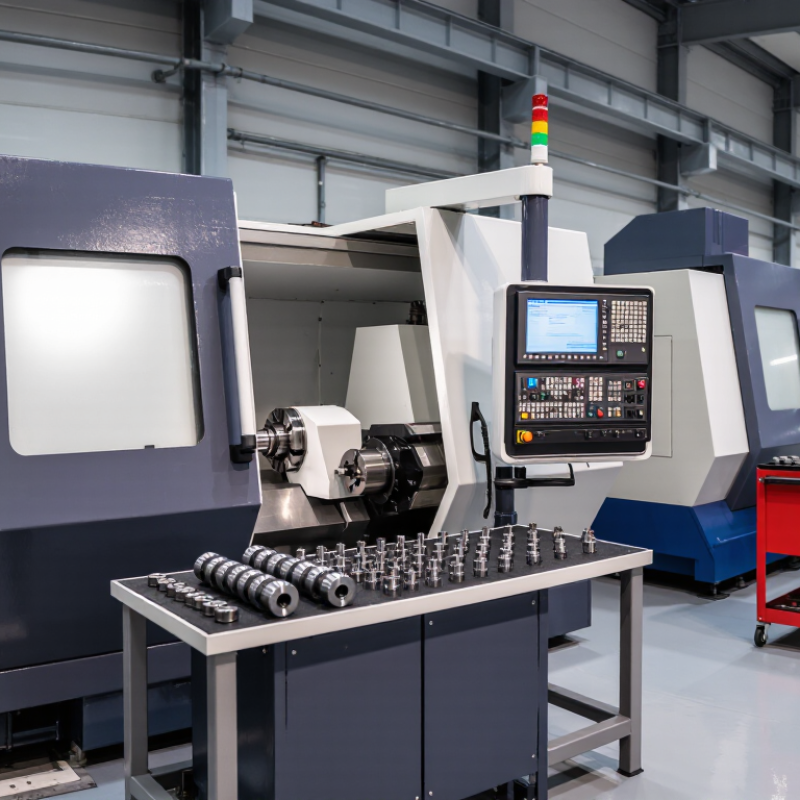
A CNC lathe is a machine tool that rotates a workpiece while computer-controlled tools remove material. Its controller coordinates spindle speed, tool position, and feed rate using programmed instructions. A chuck grips the stock; a turret presents cutting tools to its surface. The machine can turn outside diameters, face ends, cut grooves and threads, and bore internal features. In practical terms, it turns a metal bar into a stepped shaft, with each shoulder and groove following a programmed path. That is the core idea.
Capabilities vary. Some lathes use live tooling for limited milling or drilling, while simpler models mainly perform turning operations. Accuracy still depends on setup, tool condition, workholding, and thermal stability—not software alone. A small error in clamping can mark a part or shift its dimensions. I have to be cautious here: automation does not guarantee consistent parts. The International Federation of Robotics reported 541,302 industrial robots installed worldwide in 2023 in World Robotics 2024; this reflects wider factory automation, not CNC-lathe sales or performance. The distinction matters. For buyers comparing machines in China, check the number of controlled axes, spindle capacity, tool positions, and stated positioning accuracy against the actual part drawings. A specification sheet cannot replace a trial cut.
What Types of CNC Lathes Are Made in China?
Chinese manufacturers produce several types of CNC lathes, each suited to different parts and production volumes. Flat-bed lathes often handle larger workpieces and straightforward turning jobs. Their open layout can make loading and maintenance easier. Slant-bed models commonly use an inclined guideway to help chips fall away from the cutting area. They are widely used for repeat production of smaller components.
Swiss-type lathes feed slender bars through a guide bushing, helping support long, narrow parts during machining. They can suit precision components, though setup and programming require care. Vertical CNC lathes hold large, heavy workpieces on a horizontal table, which can simplify loading. CNC turning centers add features such as live tooling or a second spindle, allowing more operations in one setup. Some machines combine turning and milling functions. Setup matters.
The labels are not always used consistently, and machine configurations vary by manufacturer. Buyers should compare more than the machine type. Check spindle bore, maximum turning diameter, tool capacity, axis travel, and the materials the machine will cut. Ask for a demonstration using a part similar to yours. Inspect the finished surface and measure critical dimensions. A machine with more axes may reduce handling, but it can also bring extra programming and maintenance demands. Not always. A careful trial run can reveal practical limits that a specification sheet may not show.
What Are the Best CNC Lathe Machines in China?
China-made CNC lathes include flat-bed, slant-bed, vertical, live-tooling, Swiss-type, and mill-turn machines. The right choice depends on the workpiece, required operations, and production volume.
Representative axis configurations are shown, not market-wide statistics. Actual axis counts vary by machine configuration; additional axes can support operations such as live-tool milling, sub-spindle work, or multi-turret machining.
Which Features Matter When Comparing Chinese CNC Lathes?
What Are the Best CNC Lathe Machines in China?
When comparing Chinese CNC lathes, start with the workpiece, not the brochure. Check maximum turning diameter, bed length, bar capacity, and spindle torque against your actual parts. For steel shafts, ask for cutting-test results under a realistic load. A fast spindle is useful, but rigidity and thermal stability often matter more during long production runs. Review positioning and repeatability figures, and ask how they were measured. A number without test conditions is hard to compare.
Control usability matters too. Confirm that operators can set tools, edit programs, and diagnose alarms without a long learning curve. Check turret indexing time, chip evacuation, guarding, and access for maintenance. The International Federation of Robotics’ World Robotics 2024 report recorded 276,288 industrial robot installations in China in 2023, about 51% of global installations. This points to a broad automation ecosystem, but it does not prove that a particular lathe is reliable. A shop-floor trial tells more than a glossy specification sheet.
Tips: Request a sample cut using your material and drawing. Measure the finished part, inspect surface quality, and record cycle time. Ask for the same checks after the machine warms up. One trade-off is easy to miss: a low purchase price can be offset by difficult servicing or costly downtime. I would verify local technician access and spare-part lead times before deciding.
How to Evaluate Leading Chinese CNC Lathe Manufacturers?
Evaluating a Chinese CNC lathe manufacturer starts with the work the machine must perform.
Share a real part drawing, material, tolerance, and expected production volume. Ask for a live cutting test using comparable stock. Watch chip flow, surface finish, tool changes, and cycle stability—not just the control screen. Record the measured dimensions. Numbers need context. Request the inspection method and measuring equipment used, then compare results with your own requirements.
Check the machine’s construction, spindle specifications, axis travel, and control options against your process. Ask how key components are sourced and how final assembly is inspected. Review test reports, maintenance schedules, and references from customers machining similar parts. A polished showroom is useful, but it cannot replace a production trial. That matters. Ask who handles installation, operator training, spare parts, and technical support, including typical response times. Get these commitments in writing. I would not judge a supplier by price or brochure claims alone; a detailed checklist can still miss problems that appear after months of use. A sample run and candid discussion of limitations offer a more dependable basis for comparison.
Which CNC Lathe Best Fits Different Production Needs?
A CNC lathe should match the part, material, and production rhythm—not simply offer the most axes. For small batches of aluminum fittings, a compact two-axis machine may provide enough capacity and straightforward setup. For long steel shafts, check spindle bore, chuck size, bed length, and cutting torque. A machine that looks suitable on paper may struggle with deep cuts or long, slender workpieces. Details matter.
For repeat production, evaluate cycle time, tool capacity, chip removal, and whether a bar feeder or parts catcher will reduce operator handling. Complex components may benefit from live tooling or a sub-spindle, but these features add cost and programming demands. Check the specified positioning accuracy alongside repeatability, and ask how each value was tested. A sample-part run can reveal chatter, heat-related drift, or awkward tool access. Not every supplier’s figures use the same test conditions, so compare carefully.
Tips: Bring a real drawing and material sample when assessing machines. Confirm service response, spare-part availability, and operator training in your region. Ask for a documented acceptance test using your own tolerances. It takes time. That step can prevent an expensive mismatch, though even a careful test cannot predict every production issue.